





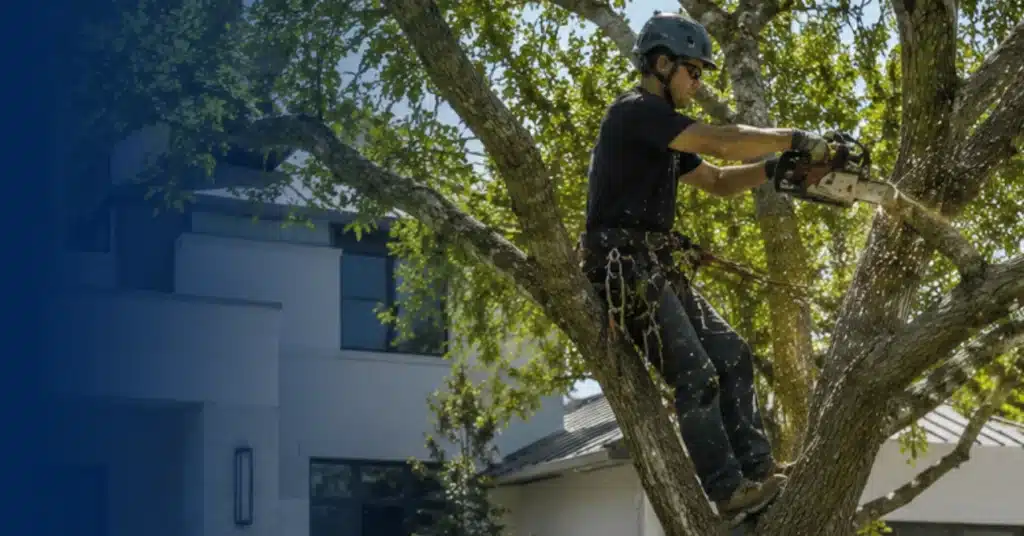


Key Takeaways About Vines Killing Trees
Heavy vines can weaken trees by adding weight shading foliage and trapping moisture. This summary is for homeowners and property managers who need quick guidance before storms or removals.
- Identify thinning canopy deadwood and bark constriction signs promptly.
- Prevent vine mats from bridging crowns and creating shared sail areas.
- Avoid pulling large loaded vines without professional staged removal plans.
- Spot fungal fruiting bodies soft wood and persistent moisture near trunks.
- Reduce regrowth with regular cutting mulch-free trunk buffers and monitoring.
- Plan professional inspections for connected crowns or visible structural damage.
Introduction
Thick, overgrown vines can slowly rob trees of health by shading leaves and adding weight to branches. Homeowners often notice thinner canopies and more dead limbs where vines have climbed for years. Those changes matter because weakened trees break more easily during storms. In wooded yards the risk rises as vines connect tree crowns into a single wind catchment.
Vines killing trees is not always obvious at first because damage builds over multiple seasons. Many owners only spot the problem after a strong wind or heavy ice event. When vines hide structural defects they make inspections harder and repairs riskier. That concealed damage increases the chance of large limb or whole tree failure during a storm.
Some vine types wrap tightly and constrict trunks while others blanket branches and add significant sail area. Both patterns change how a tree handles wind and snow loads and how it sheds water. Moist vine mats also keep bark damp which can invite fungal decay and insect entry. Those biological effects reduce wood strength from the inside out over time.
For properties in Midlothian, VA and Hanover, VA these risks matter for safety and for protecting nearby structures. Visible signs like sudden dieback, loose bark, and cracked branches point to higher failure risk during storms. A professional inspection can confirm whether vines are the main cause of decline and reveal nearby hazards. Acting on those findings reduces the chances of an emergency tree removal after severe weather.
How Vines Climb And Strangle Tree Canopies
Vines climb and strangle tree canopies by attaching to bark and growing upward toward light while using the tree for support.
- Some vines twine tightly around stems.
- Others use aerial roots to adhere to bark.
- Many form dense mats over branches and leaves.
- Heavy vines increase wind resistance on crowns.
Climbing starts at the base where a vine finds support and sends shoots upward along the trunk or main limbs. Homeowners often ask whether vines kill trees directly, and the answer is that they can by cutting off light and circulation over several seasons. As vines grow, they shade leaves and reduce the tree’s ability to photosynthesize effectively. Reduced photosynthesis weakens the tree and slows wound closure after branch damage.
Vines also add mechanical stress by increasing canopy weight and surface area that catches wind. When branches carry heavy vine loads they bend, split, or form included bark where union strength declines. Inspectors will look for tight vine wraps, cracked bark, and abnormal branch angles during a diagnosis. A professional may record photos and measurements of lean, trunk compression marks, and deadwood to confirm vine-related damage.
Moist vine mats hold humidity against trunks and branches, encouraging fungal decay and insect activity that further reduce wood strength. For example, a homeowner might see bark peeling and increased wood rot where vines remain wet for long periods. A contractor will check for fungal fruiting bodies, use a moisture meter, and probe suspect wood to assess decay extent. For guidance on safe removal and follow-up care, consider consulting resources like Route 288 Tree Service, especially for properties in Midlothian, VA and Hanover, VA.
Why Heavy Vines Kill Trees Over Time
Over years, heavy vines change a tree’s internal resource balance by diverting sugars away from new growth. That shift slows root growth and wound recovery, leaving trees with weaker root plates over time. Weakened roots reduce anchorage and increase the chance of tipping in high winds. A professional will look for reduced fine root mass and signs of poor leaf production during diagnosis.
Vines can also create chronic physical injuries where stems rub against bark and form deep grooves. Those wounds make it easier for decay organisms to enter and establish inside heartwood. Inspectors use a moisture meter and visual probes to find soft, decayed areas and record damaged bark for later comparison. Detecting these spots early helps estimate how much structural strength the tree has lost.
Dense vine load raises deadwood accumulation because shaded branches die back from lack of light and air circulation. Dead limbs add unpredictable failure points that can fail without warning during storms. A professional inspection often includes measuring distribution of dead branches and mapping likely failure zones. Homeowners in Midlothian, VA commonly report more small limb drop where vine mats reduce airflow around crowns.
Over time, vines can lock multiple trees together, creating a shared sail that amplifies wind forces across several trunks. That combined load stresses branch unions and trunk collars on otherwise healthy trees. During a field check an arborist will note inter-tree vines, test branch attachment, and photo crossing vines to build a written report. Properties in Hanover, VA with connected crowns face increased risk of group failures in severe weather.
Vines Killing Trees Signs Homeowners Should Watch
Look for sudden canopy thinning that appears uneven rather than across the whole tree, which often signals vine competition for light. You may notice clusters of dead twigs at branch ends while nearby foliage remains green. Check for bark discoloration or soft spots where vines hugged the trunk and kept moisture trapped. A pro will note these symptoms and take baseline photos and moisture readings during an inspection.
Another clear sign is persistent vine growth tightly wrapped around limbs and small trunks creating constriction marks that deepen over seasons. Homeowners sometimes find rings or ridges in the bark where the vine girdled a branch and reduced nutrient flow. Inspectors will probe suspect wood and use a moisture meter to detect interior decay near those wraps. Photographs of these constriction areas help document progression for later comparison.
Watch for an increase in small limb failures or branches cracking during normal weather, not just storms; this pattern suggests added mechanical stress. Vines that join several crowns together also change how wind transfers across trees, producing unexpected break points. During diagnosis a professional may test branch attachment and map connected vine paths between trees. Homeowners in Midlothian, VA should note any new wood rot or frequent small drops under vine-covered crowns.
Leaf loss localized to the upper crown or shaded portions under vine mats indicates reduced photosynthesis and stress confined to those zones. You might also find fungal fruiting bodies at vine bases or where bark stays damp for long periods, a sign of decay advancing. An inspector will document fruiting bodies, probe for soft wood, and record canopy dieback to assess long-term stability. For guidance on identifying these warning signs and next steps, see the company blog for practical resources related to tree and vine issues in Hanover, VA.
How Vines Increase Storm Damage And Limb Failure
Heavy vine masses change how wind forces distribute through a tree by adding uneven lateral loads along limbs and trunks. When vines bridge crowns they create continuous sail surfaces that pull on multiple attachment points at once. Those connected loads increase the chance of branch unions failing under gusts or sustained winds. Homeowners should note where several trees act as one wind catchment during storms.
- Vines raise crown wind resistance.
- They add deadweight to limbs.
- They hide weak branch unions.
- They trap moisture against bark.
- They connect multiple trees together.
Wind-driven sway becomes more damaging when vine weight shifts moment arms and torque on limb attachments. This change can turn otherwise sound branches into hinge points that split or tear out. A pro inspecting storm-prone properties will check for torn bark, cleavage at branch collars, and elongated cracks. For local homeowners in Midlothian, VA these checks inform sensible trimming or removal plans before storms arrive.
Vines also increase ice and snow loading by holding precipitation on branches longer than bare crowns do. The extra retained load raises bending moments and the likelihood of sudden limb drop during thaw cycles. Inspectors will look for crown areas with persistent debris and perform simple pull tests on suspect limbs to assess attachment strength. In Hanover, VA properties with heavy vine cover, that test often guides priority removal work.
After a storm, visible signs of vine-related failure include bark shearing, long splinters where branches ripped, and multiple adjacent trees with similar damage. A professional diagnosis includes photographing failure patterns, probing for internal decay, and recording lean or root plate disturbance. Those observations help determine whether vine removal alone suffices or if partial crown reduction or full removals are safer. For more guidance on post-storm inspections and planning, consult the company blog at Route 288 Tree Service blog.
Common Vine Species That Threaten Woodland Trees
English ivy climbs by aerial roots and forms heavy mats that smother foliage and hold moisture against bark. This vine commonly creates continuous covers that promote fungal growth in shaded, wet areas. A professional inspecting ivy will check for bark looseness, probe for soft wood, and record areas of continuous coverage. Homeowners in Midlothian, VA often report ivy hiding early decay on otherwise healthy-looking trunks.
Porcelain berry and wild grape vines add significant weight to limbs as they thicken with age and woody stems. Their woody vines can loop and tighten around branches, increasing the chance of limb splitting under load. During diagnosis a technician might trace stem paths, measure vine diameter, and photograph tight wraps for a written report. For properties in Hanover, VA, these species frequently require priority removal where they bridge crowns.
Wintercreeper and kudzu can spread across the forest floor before climbing into lower branches and forming dense blankets. These species reduce regeneration by shading seedlings and can shift soil moisture regimes near root collars. An inspection will include checking understory competition, noting suppressed young trees, and testing soil moisture in vine-dominated areas. Removing the understory mat often needs repeated follow-up to prevent quick resprouting and recolonization.
Japanese honeysuckle and bittersweet produce heavy cords that girdle smaller trunks and climb into crowns where they tangle with branches. Inspectors look for constriction marks, cambial damage, and clustered dead twigs beneath heavy loads. A professional will often document vine attachment points, test branch pull resistance, and recommend staged removal when significant crown weight exists. For practical guidance on identifying these problematic species and planning removal work, see the company blog at Route 288 Tree Service blog.
When To Call A Professional For Vine Removal
Call a professional when vines form thick woody ropes or mats that attach high in the crown and add visible weight. These heavy loads often hide weak branch unions that a homeowner should not test alone. A trained crew can assess attachment points and determine whether staged removal or branch support is needed. For a formal plan, expect documented photos and a written scope before any large work begins.
If vines have caused trunk constriction or deep bark grooves, schedule a professional inspection to check for internal decay. An arborist will probe suspect wood, use a moisture meter, and look for fungal fruiting bodies near wounds. Those checks help decide if the tree needs monitoring, pruning, or full removal to reduce risk. Homeowners in Midlothian, VA should prioritize trees showing these physical injuries near structures.
When multiple trees are bridged by the same vine network, hire a pro to prevent group failures and manage access for safe cutting. Technicians will plan cuts to avoid sudden load shifts and may use rope systems to lower heavy vine bundles. They will also evaluate nearby trunks and root plates to guard against tipping after canopy changes. For planning and follow-up treatments, refer to the company blog for practical removal strategies.
Call professionals after any storm that causes new cracks, large splits, or sudden lean near vine-covered areas to get an urgent safety assessment. A crew will document failures, perform pull tests on suspect limbs, and produce a prioritized action list with risk levels. If work requires climbing, heavy lowering, or equipment near buildings, leave it to trained arborists to reduce injury and property damage. Property owners in Hanover, VA facing immediate hazards should arrange rapid inspection and mitigation.
Safe DIY Vine Removal Methods For Homeowners
Start removal at the vine base by cutting the main stems near the soil to stop upward growth quickly. After cutting, pull or peel vines away from the trunk carefully to avoid stripping bark and creating fresh wounds. Work in sections so you do not overload a single limb with sudden weight release that could break branches. Use pruning loppers and hand saws for control and avoid climbing into the crown unless trained.
- Wear gloves and eye protection at all times.
- Cut vines close to the ground with loppers.
- Peel vines away gently from bark.
- Use a hand saw for larger woody vines.
If the vine stems are woody and thick, leave the upper portions for a professional to remove safely. Pulling large, loaded vines can shift branches and cause sudden limb failure without warning. A diagnostic check afterward should include inspecting the trunk for fresh abrasions and probing soft spots near cuts. Photograph any damage and consider scheduling a follow-up inspection if you find decay evidence.
Treat regrowth by removing new shoots as they appear and cutting them before they reach two inches in length. For persistent root systems, dig out crowns or repeatedly cut resprouts during the growing season to exhaust reserves. When using chemical controls, follow label directions and avoid applying near desirable tree roots or exposed cambium. Homeowners in Midlothian, VA might combine mechanical removal with follow-up treatments for long-term control.
Keep safety as the priority and stop work if branches show cracking or sudden movement during removal attempts. If vines bridge multiple trees or reach high into the canopy, contact professionals to manage load redistribution and safe lowering. A pro will use rope systems and record findings in a written report before and after removal. Properties in Hanover, VA with connected crowns often need staged removal to prevent unexpected failures.
Preventive Yard Practices To Stop Vine Regrowth
Create a clear root-zone buffer by keeping a mulch-free strip around trunks to discourage new vine anchors and reduce hidden stems. Regularly inspect that buffer for small shoots and remove them promptly to prevent reestablishment before they climb. Use hand removal or shallow digging to remove crowns of persistent vines without disturbing the tree root flare. Doing this yearly cuts the energy in resprouting vines and lowers future workload significantly.
Increase groundcover diversity with low-growing grasses or native perennials to occupy space vines prefer and compete for light and soil resources. Establishing competitive but non-invasive plants reduces bare soil that vine seedlings quickly colonize after removal. Monitor the replacement plantings during the first two growing seasons and pull any vine seedlings you find. This approach reduces the need for repeated mechanical cutting and chemical treatments later on.
Schedule seasonal checks in spring and early summer when new shoots are easiest to spot and before they reach two inches long and become harder to control. During each check, photograph regrowth areas and log locations so you can track stubborn patches over time. If you notice vines reattaching high on trunks, pause and call a professional to advise on safe removal and long-term control options. Homeowners in Midlothian, VA often find that consistent, simple checks prevent rapid rebound of aggressive species.
For sites with recurrent problems, consider a targeted follow-up plan that includes repeat cutting, spot herbicide application per label directions, and periodic inspections to confirm success. Keep records of treatments, photos, and dates to show trends and effectiveness for future planning or contractor consultations. If vines keep returning despite efforts, hire a professional to assess root systems and recommend a written remediation plan. Properties in Hanover, VA with persistent vine cover may benefit from this documented, staged approach.
Frequently Asked Questions
Can vines killing trees or just weakening them over years?
Heavy vines can both weaken trees over years and, in some cases, contribute to vines killing trees by accelerating decline. Vines add weight, shade out foliage, and compete for soil moisture and nutrients, reducing a tree’s vigor. Weakened trees resist wind poorly and face higher failure risk during storms, so caution is warranted. If a tree shows decline or poses a hazard, contact a professional arborist or tree service for a safety assessment.
How do heavy vines increase storm failure risk?
Heavy vines add significant weight and wind surface to tree crowns, increasing leverage on branches during storms. Vines can hide decay and cracks, preventing early detection of structural weakness by homeowners. Roots and trunks stressed by vines lose vigor, reducing the tree’s ability to flex and recover under wind loads. If a tree shows large vine loads or visible failure signs, exercise caution and contact a professional arborist for inspection and safe removal.
What signs show vines have caused internal decay?
Look for cracked or sunken bark where vines girdle branches or the trunk, which often indicates underlying decay.
Cavities, soft crumbly wood, or fungal fruiting bodies at the base or on limbs show internal rot progression.
Dead or thinning foliage in the canopy above vine growth also signals compromised vascular flow and structural decay.
If you see these signs, exercise caution and contact a professional arborist to inspect and safely assess risk to the tree and property.
When should I call a pro for vine-covered trees?
Call a pro when vines cover more than half the canopy or rub heavily against major limbs, which stresses the tree.
If vines hide cracks, dead wood, or leaning trunks, a professional can assess structural failure risk and safety.
Avoid climbing or cutting near power lines or large, unstable trees; these situations present clear danger and need experts.
A certified arborist or experienced tree crew will inspect roots, trunk attachment, and load to recommend removal or pruning safely.
What safe steps stop vines from reattaching?
Cut vines back to the root collar and remove all climbing material from the trunk surface to prevent reattachment. Apply a targeted herbicide to freshly cut stems according to product instructions, avoiding runoff onto desirable plants. Place a 6–12 inch weed barrier or mulch band around the base to discourage new shoots from reaching the trunk. If vines climb high or risk falling, exercise caution and hire a professional to reduce injury and further damage.