





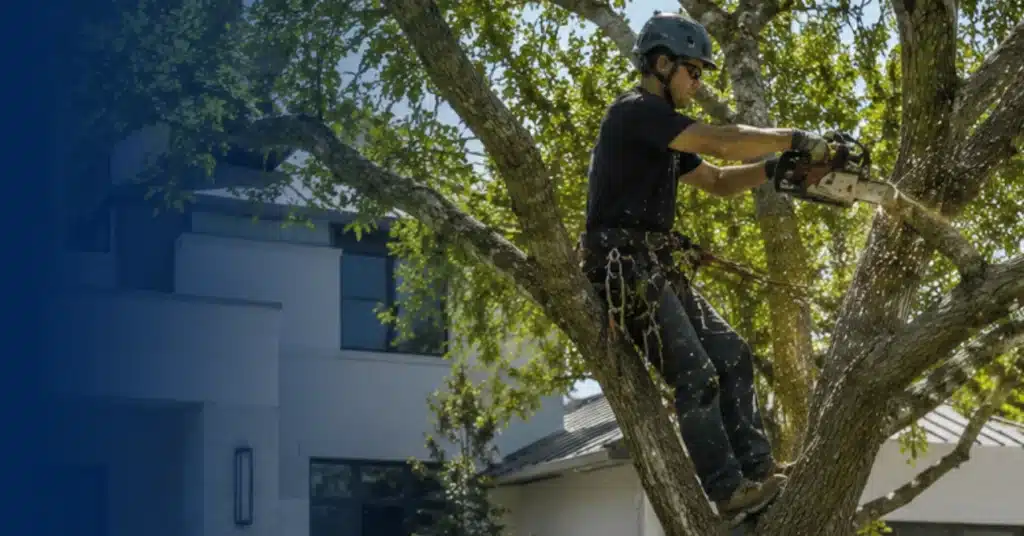
Storm Damage Services are focused inspections and practical recommendations after high winds, heavy rain, ice, or fallen trees affect a commercial property. We look for things a building owner or property manager might miss: cracked trunks leaning toward structures, large limbs stuck on roofs, root heave near pavement, and trees with split bark or hanging branches that could fail later. This service helps turn an uncertain, messy situation into a clear set of safety priorities and next steps.
You might call for this service after a storm knocks limbs into a parking lot, strips branches from a street canopy, or leaves a tree leaning toward an entrance. Quick, accurate evaluation matters because some issues can wait a few days, while others—like a split trunk over a walkway—need immediate attention. The goal is to give straightforward, actionable advice so you can decide what to repair, remove, or monitor next.
How Our Storm Damage Review Works
When we arrive for a storm damage review, the crew first checks site access and safe working zones. We note blocked drives, hanging wires, and pedestrian routes before getting within arms reach of any tree. That quick sweep keeps your staff and our team clear of obvious hazards and tells us which areas need a closer look first.
Next, a specialist does a focused walk-around with the property manager or on-site contact. We point out visible failures—split trunks, torn root flares, limbs leaning on roofs—and take photos for your records. You’ll hear immediate priority recommendations, like cordon-off advice for a rooftop limb or signage for an unstable tree near a public entrance.
After the walk-through we document findings and suggested next actions in a short report. The report lists items that need urgent removal, things safe to monitor, and options where removal versus repair is appropriate. That written summary helps you budget, schedule, and communicate the plan with tenants or owners without guesswork.
Storm Damage Issues We Look For on Commercial Properties
After the initial review we inspect for hanging or “widow” limbs that stayed attached but lost structural support. These arms can snap days after a storm, especially when rain-soaked leaves add weight, so we note size, height over walkways, and whether they’re caught on roofs or power lines. You’ll get a clear call on which hanging pieces need immediate removal versus which ones can be monitored for a short period.
We look for trunk cracks and splits next. A vertical split or a long seam down the trunk often means the tree can fail unpredictably. I’ll point out splits that run toward entrances, parking areas, or HVAC equipment, since those deserve fast attention, and I’ll mark smaller bark tears that usually require monitoring instead of removal.
Roots and soil movement tell a different story. Uplifted pavement, tilted light poles, or exposed root plates suggest the tree lost anchorage. Those trees are risky near delivery zones or building foundations. We note whether a tree is leaning due to root damage or simply shaken loose in the canopy, because that changes the recommendation.
Finally, we check access and secondary hazards created by debris. Clogged drains, branches on roofs, and piles of small debris in fire lanes can cause operational headaches after the storm. I’ll highlight issues that block exits or create trip hazards so you can schedule cleanup and repairs in the right order.

Sorting Urgent Hazards From Lower-Priority Repairs
When we prioritize recommendations after a storm, safety to people and property comes first. Items that pose an immediate collapse risk—like a split trunk leaning toward a loading dock or a heavy limb hanging over a busy walkway—get flagged for urgent removal. Less urgent issues, such as small torn branches on a rooftop or minor bark damage away from entrances, are identified as monitor-and-recheck items so you can avoid unnecessary disruption.
We also weigh access and operational impact when ranking work. A tree that’s unstable but sits behind locked gates or away from daily traffic may be scheduled later without increasing risk. By contrast, debris blocking fire lanes, delivery bays, or building exits moves up the list because it affects safety and your ability to do business.
Another factor is secondary hazards created by the damage. Branches that contact rooflines, gutters, or HVAC units can cause water intrusion or equipment damage even if the tree itself seems stable. We call those out separately so you can choose targeted repairs first, rather than full removals, when appropriate.
Finally, we make recommendations you can act on immediately and ones you can budget for. You’ll get a short list of must-do items, things to watch, and options for staged work. That way you can protect tenants and operations now, while planning larger removals without pressure.
What Helps Us Inspect the Site Safely
Send photos before the visit when you can. Clear shots of the damaged tree, the base, and any affected roof or pavement save time. If a limb is hanging over a delivery lane or entrance, include an image that shows the clearance from the ground and any nearby vehicles or signage.
Tell us where trucks can park and whether gates or loading docks require codes. Limited parking or narrow entrances change the crew size and equipment we bring. If tenants are present, let us know which entrances they use most so we can avoid disrupting foot traffic during the inspection.
Point out areas we should not enter without permission, like locked mechanical yards or tenant-only zones. Flag obvious hazards for us—downed power lines, spilled fuel, or unsecured scaffolding—and we’ll keep clear until the appropriate contractor or utility is on site. Also mention any recent temporary fixes tenants made, such as rope supports or propped limbs, so we evaluate those alongside the original damage.
How Cost Ranges Are Usually Affected
Several clear factors drive cost after storm damage. Large trunks and limbs require bigger crews and cranes, while small canopy work can often be handled with a bucket truck and two-skilled climbers. Trees close to buildings, roofs, or power lines add complexity; tight clearances force slower, more careful cuts and sometimes specialty rigging to protect structures.
Site access matters a lot. Wide paved lots let us park chippers and bring in loaders quickly. Tight alleys, locked gates, or underground utilities mean we need smaller equipment or more hand labor, which raises labor hours even when the tree size is moderate. Tell us about parking and access ahead of time to reduce surprises on the day of work.
Debris volume and disposal choices affect price too. A single fallen limb over a roof can require careful disassembly and roof protection, while a stand of downed trees creates truckloads of brush and logs. You can choose to have us haul everything away or stack material for later pickup; the haul-away option changes the on-site time and equipment needed.
Urgency and timing change cost patterns as well. Same-day emergency removals often need more crew members and overtime rates. If the work can wait a few days, we can stage crews and work around your deliveries to limit disruption and often reduce the immediate bill. When you’re ready, we’ll review which factors apply so you can choose priorities and a budget that fit operations.
Schedule a Storm Damage Assessment
If you’re ready to set a time for a storm damage assessment, we’ll book a short site visit to see the actual hazards and give clear next steps. Tell us which trees concern you, where the damaged areas are, and whether the issue blocks entrances or delivery lanes. That helps us bring the right crew and equipment for an accurate, efficient review.
During scheduling, mention any access limits or tenant hours so we avoid disrupting operations. If you can email a few photos of the damaged tree and its surroundings, we’ll use them to prioritize the stop and tighten the checklist before arrival. Photos also speed the call-back with immediate safety notes if anything looks urgent from the images.
When we confirm the appointment, expect a short confirmation with arrival window and crew size. The on-site specialist will walk the property with your contact and flag immediate hazards, then explain the recommended next steps you can act on. If you want, we’ll follow up with a concise written summary and a few options for repairs or staged work to fit your budget and schedule.
Frequently Asked Questions
What happens during a storm damage review on my commercial property?
The crew first secures safe access and notes blocked drives, downed lines, and pedestrian routes. A specialist then walks the site with your contact, photographs failures like split trunks or roof‑caught limbs, and gives immediate priority recommendations. You’ll get a short written report listing urgent removals, items to monitor, and suggested next steps.
Which specific tree problems do you look for after wind, rain, or ice?
We check for hanging limbs that could fail later, vertical trunk splits, exposed or lifted root plates, and limbs resting on roofs or HVAC units. We also note debris that blocks fire lanes, drains, or building entrances so you can schedule cleanup in the right order. Each issue is classified by its location and likelihood of causing damage or injury.
How do you decide what needs immediate removal versus what can wait?
Priority goes to hazards that threaten people or operations, such as a split trunk over a loading dock or a heavy limb above a busy walkway. We also consider access and operational impact—debris blocking exits or delivery bays moves up the list. Lower‑risk items away from traffic are marked for monitoring or staged work.
How can I prepare the site to make the inspection go smoothly and safely?
Email clear photos of the damaged tree, its base, and any nearby roofs or pavement before the visit when possible. Tell us about parking, gate codes, tenant hours, and areas we must avoid so we bring the right crew and don’t disrupt operations. Flag obvious hazards like downed power lines or fuel spills so we can keep clear until those are secured.
What factors influence the cost range for storm damage repairs and removals?
Price is influenced by tree size, proximity to buildings or power lines, site access, debris volume, and equipment needs like cranes or bucket trucks. Tight lots, locked gates, or nearby utilities increase hand labor and time, while haul‑away versus stacking debris changes disposal work. Urgency also affects cost since emergency same‑day work typically needs larger crews and overtime.
We’ll handle the rest.