






Key Takeaways About Tree Branches Near Power Lines
This topic covers how overgrown limbs next to electrical conductors create fire electrocution and outage risks. It is for homeowners and property managers before and during summer storms when hazards rise.
- Identify limbs that cross the vertical plane of conductors.
- Prevent regrowth by scheduling targeted pruning cycles regularly.
- Avoid touching or attempting cuts near energized service drops.
- Spot visual cues like scorch marks humming or melted insulation.
- Reduce risk by documenting clearances with photos and measurements.
- Plan professional inspections when decay cracking or recent failures appear.
Introduction
Summer storms can turn tree branches near power lines into immediate safety hazards for homeowners. When limbs touch or sag toward conductors they can start fires or cause dangerous arcing. Wind and saturated soil make already-close branches more likely to break and fall. In neighborhoods from Short Pump, VA to other suburbs, the risk rises quickly during heavy weather.
Overgrown branches also create repeated outages and stress on utility equipment. A single rubbing limb can wear insulation on a service drop or a neutral conductor over time. You might notice flickering lights, buzzing near the panel, or scorch marks on outdoor fixtures. Those signs mean the problem is not just cosmetic and needs attention.
Contacting a qualified arborist or tree service protects people and property when branches threaten lines. Professionals assess clearances, trim with safety practices, and coordinate with utilities if lines are energized. Attempting work near energized conductors increases the chance of electrocution and property damage. Always treat any branch contact with utility lines as a serious safety issue.
Property owners in Richmond, VA should watch trees closely during summer growth and storm seasons. Regular inspections reduce emergency calls and help utilities maintain reliable service. Look for visible lean, cracked limbs, or recent lightning or wind damage as early warning signs. Early action keeps your home and neighborhood safer when the next storm arrives.
Why Overgrowth Causes Power Line Contact
Why overgrowth causes power line contact means branches grow into the space around energized conductors and touch them. Vegetative growth narrows the clearance between limbs and service drops, increasing the chance of contact during normal wind. Homeowners often ask whether visible contact always causes outages; yes, even brief rubbing can cause arcing, sparks, or insulation damage. Inspecting for contact helps you decide whether to call a professional before a storm arrives.
- Branches can sag under weight and reach conductors.
- Wind increases side-to-side movement of limbs.
- Wet foliage conducts electricity better than dry leaves.
- Dead wood loses strength and breaks toward lines.
Physical causes include growth rate, branch architecture, and limb weight combined with line height differences. Environmental causes include heavy rain, wind gusts, and saturated soil that loosen roots and change canopy position. A professional will look for cracked crotches, included bark, and decay that raise failure risk during storms. Those visible cues often predict which limbs will contact a line first.
Electrical causes include capacitive coupling and arcing when insulation wears thin from repeated rubbing against branches. You might smell ozone or see small burn marks on nearby equipment as early signs of electrical stress. A trained arborist uses binoculars, rope access, and voltage awareness practices while inspecting lines for risky tree branches near power lines. For planning and scheduling, visit the company site to learn about coordination with utilities and safety protocols.
How Summer Storms Increase Branch Hazards
Summer storms raise hazards by adding dynamic forces that push and pull branches toward conductors. Heavy gusts swing limbs laterally, increasing collision chances with service drops and span wires. Rapid rain can add significant weight to foliage and fruit, making previously stable limbs droop. In Short Pump, VA, saturated soil can loosen root anchors and let whole trees shift during storms.
Lightning strikes create internal wood damage that may not be obvious until wind breaks weakened limbs. After a strike, branches can blister, split, or lose structural integrity and fall unpredictably onto power lines. A storm that combines wind and lightning greatly raises the probability of sudden contact and sparks that threaten homes. Professionals often look for those hidden failure signs during post-storm assessments.
Falling branches can damage electrical components such as service entrances, junction boxes, or meter sockets when they strike. Even noncontact impacts transmit shock waves through a tree and can dislodge conductors or insulators from supports. Homeowners might hear loud bangs, notice arcing smells, or see immediate power loss after such impacts. Inspectors check for physical damage to the service panel and visible burn marks after storm events.
Utilities and arborists coordinate more during summer because storms cause clusters of incidents that require planned response. A professional diagnosis includes a visual canopy survey, photo documentation, and measurements of clearance from conductors using telescoping poles or binoculars. For information about how crews work in your neighborhood, consult the company’s service area details at service areas. In Richmond, VA, this coordination reduces response time and clarifies who manages trimming near energized lines.
Identifying Tree Branches Near Power Lines
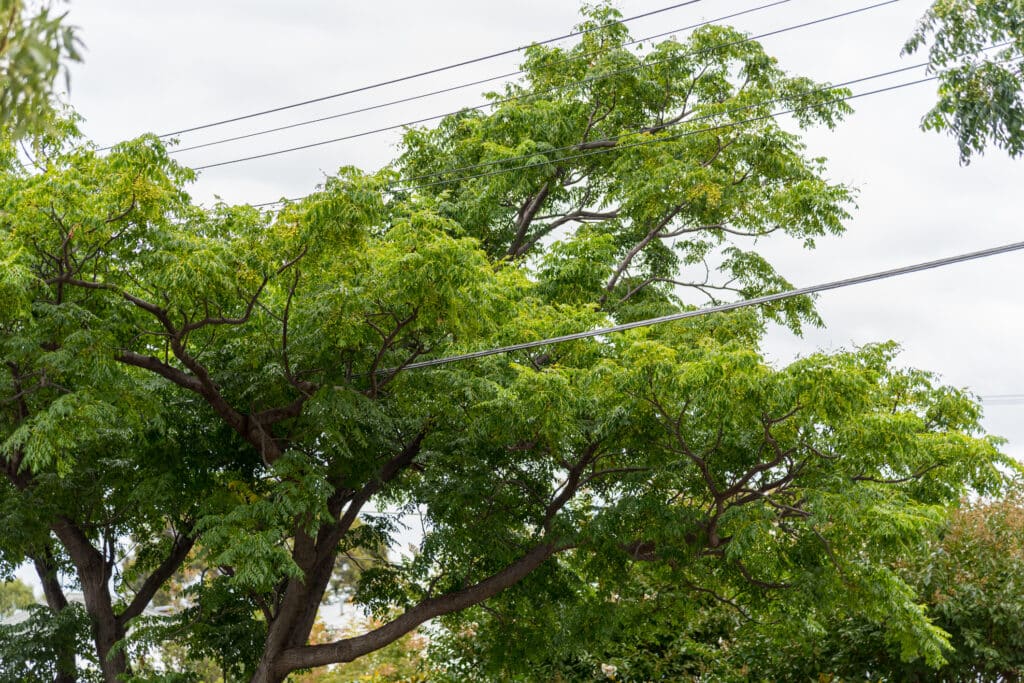
Walk your property and look for visible proximity where tree branches near power lines appear to enter the utility corridor. Note branch tips that cross the vertical plane of the conductor and any limbs within a few feet of the service drop. Photograph the problem from a safe distance and record which side of the house the contact risk is on. These notes help a professional prioritize which limbs to assess first during an inspection.
Listen and watch for subtle signs that indicate electrical interaction before physical contact occurs, such as a humming near the meter or intermittent flicker at certain switches. Inspectors also look for scorch marks on nearby hardware, melted insulation on low-hanging wires, and chewed bark where rubbing has occurred. If you see any of these cues, mark the location and avoid touching the branch or wire. A professional will use binoculars and voltage awareness practices to confirm the danger without direct contact.
During an on-site diagnosis, a technician examines branch attachment points, trunk decay, and the angle of limb growth to judge failure risk. They will measure clearances using poles and may capture photos or written notes as inspection outputs for decision making. The professional checks service components like the service entrance, meter socket, and nearby junction boxes for physical stress or deformation. That information guides whether pruning alone, cabling, or full removal is safer for the property.
Homeowners in Short Pump, VA and Richmond, VA often find it helpful to keep a simple checklist before calling for help: photos, nearest access point, and whether power is currently unreliable. Share those details when scheduling a visit so the crew brings proper equipment and coordinates with the utility if lines are energized. For more background on typical situations and what to expect from a visit, see the company blog for related posts. Clear documentation speeds diagnosis and reduces the time crews spend near energized lines.
Common Tree Species That Reach Power Lines
Certain species grow quickly and often encroach on utility corridors, making them common culprits for tree branches near power lines. Large canopy trees with long lateral limbs tend to reach spans over wires within a single growth season. When assessing species, professionals note growth rate, branch strength, and typical mature height to predict future conflicts. Homeowners should identify these traits to decide whether proactive pruning or removal is needed.
- Silver maple grows fast and sends heavy lateral limbs.
- Sweetgum develops broad crowns that extend toward wires.
- Poplar branches are long and brittle in storms.
- Willow limbs droop and can sag into service drops.
Other common species pose different risks because of wood strength and failure patterns rather than growth speed. Pines and other conifers shed large limbs under wind and ice loads, increasing strike risk to conductors. Oaks grow slowly but produce heavy branches that can be catastrophic if they fail close to service entrances. A professional inspects attachment points and decay to judge which species require immediate attention.
For example, a mature maple with a long lateral limb over a driveway shows visible rot and bark loss near the crotch. An arborist would check branch taper, use binoculars, and probe the wood for softness during a diagnosis. They might record photos and recommend removal if decay reaches structural members near the conductor. Homeowners in Short Pump, VA and Richmond, VA often find that identifying species early helps schedule safe pruning before storm season.
When To Call A Professional Tree Service
Call a professional when you observe structural decay near conductors, recent limb failure, or when branches are within arm’s reach of energized wires. A trained crew will perform a safety-focused assessment including a visual canopy survey and a closer inspection using binoculars and a noncontact voltage awareness approach. Expect the technician to document findings with photos and written notes to support recommended actions and any necessary utility coordination. If you smell ozone or see burn marks on outdoor equipment, arrange a professional visit promptly rather than waiting for routine service.
Professionals diagnose risk by checking attachment points, probing for soft wood, and measuring clearance with poles or telescopic tools. They will inspect service components like the meter socket, junction boxes, and service entrance for deformation or melting signs caused by rubbing limbs. The crew may use rope access or aerial lifts to reach high crowns safely and to avoid putting tension on service drops. Based on the inspection, they provide options such as targeted pruning, cabling, or full removal with documented risk rationale.
If the tree work will occur near energized conductors, the professional will coordinate with the utility for de-energizing or an approved safe work plan when required. This coordination protects both the crew and the property by clarifying responsibilities for outages and temporary access restrictions. Homeowners should share photos, site access details, and any recent outage history when scheduling the visit to help crews plan equipment and permits. For questions about chemical treatments or emissions during tree work, review background information at what are VOCs to understand potential concerns.
Choose a service that clearly explains the decision points for each option and provides a written scope of work before starting. A good proposal lists safety measures, estimated time, and whether the job needs the utility’s involvement to proceed. Ask the provider how they manage falling debris near the service entrance and whether they will inspect the panel after work for heat or impact damage. Scheduling sooner rather than later reduces emergency risk during the next storm season in Short Pump, VA and helps protect property in Richmond, VA.
Safe DIY Trimming Practices For Homeowners
Before attempting any cuts, do a clear safety scan from the ground to find limbs that could fall toward wires or structures. Wear safety glasses, heavy gloves, and a hard hat if available to protect from falling debris and snapped branches. Keep a charged phone nearby and do not work alone so someone can call for help if an injury occurs. If you detect melted insulation or an electrical smell, stop immediately and contact a professional instead of continuing work.
Use proper hand tools for small branches: bypass pruning shears for twigs and a pruning saw for limbs up to two inches in diameter. Cut branches back to a lateral branch or collar, making clean angled cuts to promote wound closure and tree health. Avoid topping or making flush cuts that leave exposed trunk tissue and increase decay risk over time. After each cut, inspect the remaining limb for cracks, rot, or hidden defects that could fail later during storms.
Maintain a safe work zone by marking off the area under the canopy and keeping bystanders at a distance until all debris is cleared. When removing a cut limb, control its descent using rope or by creating short manageable sections that you lower by hand. Never stand directly below a limb that could swing or snag on a conductor, and avoid positioning ladders under or near service drops. If a limb becomes entangled with a wire, do not attempt to free it; call the utility and a trained crew.
Document your observations with photos and notes showing exact clearance distances and damaged areas so a professional can review them later if needed. A simple measurement with a tape or marked pole helps show how close tree branches near power lines actually are. Share that information when scheduling work so crews arrive with appropriate equipment and safety plans. Homeowners in Short Pump, VA and Richmond, VA should prioritize a professional assessment when any doubt remains about energy risks or structural stability.
Preventative Pruning To Reduce Future Risks
Plan pruning cycles on a predictable schedule to keep limbs from re-entering the utility corridor as trees mature. Targeted reductions every few years remove vigor from the specific scaffold branches that grow toward conductors. A certified arborist can propose species-specific timing to avoid heavy sap loss or stress during active growth. Document each pruning visit with dated photos and notes to track canopy shifts over time.
- Remove small competing leaders near the conductor.
- Shorten long laterals to reduce wind leverage.
- Thin inner canopy to lower wind sail.
- Balance crowns to reduce uprooting risk.
When planning, include margin clearances that meet utility expectations without over-pruning the tree canopy. Professionals often aim for gradual crown reduction rather than large single-event cuts that weaken structure. Ask the crew to record clearance measurements and take before-and-after photos for future reference. These records simplify decisions if a future storm causes new failures.
Inspect pruned trees the season after work to confirm regrowth direction and wound closure progress. Look for vigorous shoots that push toward lines and schedule small corrective trims promptly. For properties in Short Pump, VA and Richmond, VA, follow-up checks reduce emergency response needs during summer storms. If any doubt remains about a limb’s stability, contact a professional for a formal reassessment and written recommendations.
Utility Company Rules And What To Expect
Utility companies set clear work zones and clearance standards for crews responding to vegetation contacts near conductors, and they often require coordination before any trimming near energized lines. When you report a hazard, expect the utility to inspect the scene and determine whether they will de-energize the line or require line workers on site. That inspection typically documents conductor condition, attachment hardware, and whether vegetation has caused insulation wear or arcing evidence. Prepare to describe recent outages or visible damage so the utility can prioritize response appropriately.
If the utility decides to perform or supervise clearing, they may remove or trim vegetation up to the easement or service drop, and they will record what was cleared for liability purposes. Their crews focus on immediate electrical safety and may not restore aesthetic pruning, so expect differences between utility cuts and arborist pruning. In many cases a utility permit or work order is generated and a copy kept with incident photos and notes for both the homeowner and crew. Keep those records for later coordination with private tree contractors if additional work is desired.
Before any contractor begins work near energized conductors, ask whether the job requires utility notification or a scheduled power outage to meet safety protocols. Professionals commonly request marked utility inspection reports, photographs, and written clearance limits to avoid accidental contact during pruning or removal. A certified crew will use insulated tools, rope control, and follow an approved plan when the utility remains energized. If an outage is scheduled, expect a window for work and a brief restoration test once cutting is complete.
After utility involvement, homeowners should expect follow-up documentation that explains what was trimmed and why, and whether additional tree work is recommended for long-term clearance. If you need broader canopy shaping beyond safety trims, coordinate a separate visit from a tree service and share the utility’s recorded clearance measurements. For properties in Short Pump, VA record the utility work for your maintenance files and discuss next steps with a qualified arborist familiar with local species growth habits. Keep utility reports and contractor estimates together to support future decisions about recurring pruning needs in Richmond, VA.
Frequently Asked Questions
How close is safe for tree branches near power lines?
As a rule, utility companies and arborists advise keeping tree branches at least 10 feet from power lines to reduce contact risk. Closer distances increase chances of electrical arcing during summer storms and when branches are wet. If you see branches touching or within a few feet of lines, treat it as a safety hazard and avoid the area. Contact a professional arborist or your utility for safe pruning and removal rather than attempting the work yourself.
What signs show branches may contact service drops?
Look for branches touching or hanging directly above the service drop, frayed ends, or leaf clusters that brush wires in wind. Watch for sparks, buzzing sounds, or scorch marks on bark near attachment points. If branches sway into conductors during storms, the risk of outages and arcing increases significantly. Exercise caution and call a qualified arborist or utility-trained crew to assess and remove hazardous tree branches near power lines.
Can summer storms make nearby limbs more dangerous?
Yes. Summer storms bring high winds and heavy rain that increase sway and weight on limbs, making failure more likely. Wet foliage and saturated soil reduce root stability, raising the chance a tree or limb will contact energized conductors. If branches near power lines look cracked, scraped, or lean toward lines, exercise caution and call a professional trained to handle tree branches near power lines.
Who inspects and documents hazards near conductors?
Utility company line crews and qualified arborists usually inspect and document hazards near conductors after reports or storm damage.
They identify contact points, clearances, conductor condition, and any vegetation encroachment such as tree branches near power lines.
Inspectors take photos, written notes, and measurements to create a record for repair or removal decisions.
If you see a risk, exercise caution and contact the utility or a professional arborist rather than attempting work yourself.
When should I call a pro for branches touching wires?
Call a professional as soon as branches touch or sag onto live wires or create sparks during wind or summer storms.
If limbs scrape or rest on service drops, treat the situation as a potential electrical hazard and avoid the area.
A certified arborist or utility-trained crew will inspect clearances, use insulated tools, and coordinate with the utility if needed.
For safety, do not attempt to trim near energized lines yourself; contact a pro who can confirm and correct tree branches near power lines.