




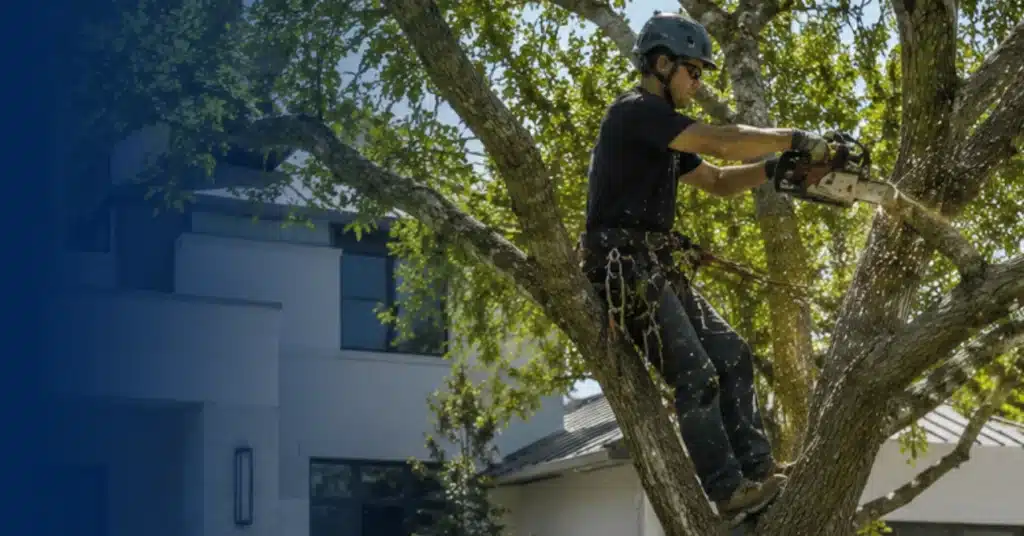
Tree removal is the careful cutting and removal of a whole tree when it is dead, diseased, a safety hazard, or interfering with buildings and utilities. Property managers and business owners call for this service when a tree leans toward a structure, roots threaten pavement or underground lines, a storm leaves major structural damage, or a tree simply needs to come out to make way for construction.
Getting a tree removed matters because a failing tree can cause costly damage, disrupt operations, or create liability for the property owner. A good evaluation helps you decide whether the tree must go now, can wait, or can be salvaged with pruning. We focus on clear, practical recommendations so you can make a safe, informed decision for your commercial property.
How We Evaluate a Commercial Tree for Removal
When we evaluate a commercial tree for removal, we start with a quick visual sweep of the trunk, major limbs, and root flare. The contractor looks for clear indicators like large vertical cracks, fungal conks on the trunk, deep decay at the base, or a definite lean that’s shifted since the last inspection. We also note split limbs, dead crowns, and any recent storm damage that makes the tree unstable.
Next we assess the site around the tree. That means checking proximity to buildings, sidewalks, parking areas, overhead wires, and underground utilities if visible. We pay special attention to entry and exit paths for equipment, staging areas for debris, and any landscaping features that must be protected during removal. If roots are heaving pavement or lifting curbs, we mark that as a serious concern for nearby infrastructure.
We combine physical signs and site constraints to make a recommendation. If visible decay or a compromised trunk meets safety thresholds, we’ll advise removal rather than temporary fixes. If problems are limited to a few limbs or the risk to structures is low, we may recommend targeted pruning and a follow-up inspection. Each recommendation includes the main reasons so you see the practical trade-offs and urgency.
When Removal Makes More Sense Than Pruning
Some trees need full removal because their problems go beyond a few bad limbs. A trunk split running from the roots to the canopy, deep decay at the base, or fungal fruiting bodies mean the structural core has failed. In those cases, pruning only removes symptoms and leaves a collapse risk that can damage buildings or block access lanes.
Severe lean that has moved since the last inspection is another clear sign removal is safer. A slight lean after planting can be fixed, but a trunk that has shifted or roots exposed on the downhill side usually indicates progressive failure. On commercial sites, that leaning tree often sits near parking, delivery routes, or walkways where a fall would cause costly downtime or injury.
Roots that lift pavement, undermine curbs, or intrude into utility trenches often force removal too. You can cut a few roots, but the remaining root plate may not support the tree long-term. If construction, foundation work, or new utilities are planned, removing the tree ahead of those projects prevents repeated damage and surprise delays.
Finally, trees with large dead crowns after storms or chronic internal decay are rarely good candidates for preservation. Salvaging one or two branches might improve appearance, but it won’t stop an unpredictable failure. When safety, access, and site work matter, full removal is usually the practical, lower-risk choice for commercial properties.
Planning Around Buildings, Parking Areas, Utilities, and Foot Traffic
Before we touch a tree near a building or parking area, we map the site with practical access in mind. We note where trucks can park, where cranes or lifts would sit, and how debris will be carried out without blocking delivery bays. That plan often changes what removal method makes sense; a tight loading dock can rule out a large chipper and push us toward sectional rigging instead.
Pedestrian flow is a priority on busy properties. We point out where temporary barriers and detour routes should go, and which doors or sidewalks to close during work. Clear, short closures keep tenants and customers safe and let the crew work faster with fewer interruptions to your operations.
Utilities and vehicle circulation determine staging too. Overhead wires or nearby transformers change where we lower cut sections, and underground conduits limit where heavy equipment can sit. We’ll flag any conflict that could force extra precautions so you can coordinate with your facilities team or utility providers before work begins.
Finally, we suggest simple site preparations you can handle that reduce downtime. Moving a few cars, unlocking gates, and clearing storage near the tree often shaves hours off the job. Small steps like these keep removal focused on the hazard, not on shifting obstacles.
What Affects Commercial Tree Removal Cost
Tree size and condition drive most commercial removal costs. A 40-inch oak with internal decay needs more crew, rigging, and caution than a 12-inch ornamental. Large trunks take longer to cut safely, and compromised wood often requires sectional removal to control where heavy sections land.
Location and access change the scope fast. Trees tucked between buildings, overloading docks, or behind fences mean we bring smaller tools, more hands, or a crane. If trucks can’t park close or a lift can’t get a straight line, the crew spends extra time rigging and moving pieces by hand.
Debris handling and stump needs add clear costs. Chipping and hauling away large volumes of green waste is labor- and equipment-intensive compared to leaving chips on site. Removing or grinding a stump adds machinery and disposal steps you’ll want to decide on before the crew arrives.
Complexity of the work ties those factors together. Overhead wires, nearby utilities, heavy pedestrian traffic, and required protective measures all increase labor and supervision. That’s why we recommend an on-site estimate — the crew can see hidden constraints that change the price and give a practical recommendation you can act on.
What Happens Before, During, and After Removal
When you call to schedule a commercial tree removal, we start by confirming site constraints and preferred access windows. The crew passes along a short checklist of what to clear and where trucks can park. That lets the team arrive ready with the right tools rather than improvising around delivery schedules or locked gates.
On the day, the crew sets up exclusion zones and positions equipment based on the pre-visit notes. For tight spots, we work sectionally, lowering cut pieces by rope so we don’t block loading docks. If a crane or lift is needed, we stage it where it causes the least disruption to customers and deliveries.
After cutting and hauling major sections, the crew chips or loads limbs according to your preference and site rules. Stump handling is left for your decision; we’ll explain options on site so you can choose disposal or grinding. Before leaving, we walk the area with you to confirm access routes are clear and any protected landscaping is intact.
Schedule a Commercial Tree Removal Assessment
If you’ve got a specific tree that worries you, the next step is a focused on-site assessment. We’ll come look at the exact trunk, root zone, and surrounding features so the recommendation applies to that tree—not a rough guess over the phone. That visit is about identifying immediate hazards, practical removal options, and any site actions you should take before work starts.
During the assessment the crew points out what makes removal urgent versus what can wait. We’ll note things like a cracked trunk near a loading bay, roots heaving a sidewalk, or a tree leaning toward a delivery route. You’ll get plain-language advice on whether removal is the safest call, whether targeted pruning could hold off removal, and what impacts each choice has on access and operations.
The assessment also covers logistics you’ll want to plan for. We’ll flag where trucks and lifts should park, which doors or walkways to close temporarily, and whether a crane or sectional removal is the practical route. These are the small details that shape a smooth job and keep disruptions to tenants and customers minimal.
When you’re ready, we can schedule the evaluation at a time that fits your operational windows. There’s no hard sell on site—just clear recommendations you can act on. If you want to book a visit, tell us which tree to inspect and when access is easiest for your crew.
Frequently Asked Questions
How do you decide if a commercial tree needs full removal or just pruning?
We start with a visual inspection of the trunk, major limbs, and root flare and pair that with site factors like nearby buildings and traffic routes. If we see deep decay, a trunk split, fungal conks, significant lean, or roots lifting pavement, removal is usually safer than pruning. If problems are limited to a few limbs and the root plate looks sound, we may recommend targeted pruning and a follow-up check. Each recommendation comes with the main reasons and urgency level so you can plan next steps.
What should property managers prepare before the crew arrives for a removal?
Clear vehicle access, unlock gates, and move cars or stored items away from the work area when possible to save time on site. Identify any delivery windows or high pedestrian periods so we can schedule work during low-traffic times. If you have preferred chip disposal or want the stump ground, tell us ahead of time so we bring the right equipment. Small preparations like these reduce downtime and keep the job focused on the tree.
How do you protect buildings, parking, utilities, and people during a removal?
We set exclusion zones and route pedestrian traffic away from the work area, then choose a removal method that fits the space—sectional rigging in tight spots or crane work where needed. We plan where trucks and lifts will sit to avoid underground conduits and coordinate on overhead wires. Before cutting, we point out which doors or loading bays to close so tenants and customers stay safe and operations can continue with minimal interruption.
What factors most influence the cost of a commercial tree removal?
Size and condition of the tree, site access, and the work complexity are the primary cost drivers. Large trunks, internal decay, tight spaces between buildings, overhead wires, and required traffic control all add crew time and equipment. Debris handling, stump removal or grinding, and whether a crane is needed also change the scope. An on-site estimate shows the real constraints and gives a practical price range for your situation.
What can I expect during the assessment visit and how do I schedule one?
The assessment is a focused on-site review of the trunk, root zone, and surrounding features to identify hazards and practical removal options. The crew will explain urgency, compare removal versus pruning, and flag logistics like parking, closures, or crane needs. To schedule, tell us which tree to inspect and the best access windows for your property so we can plan a visit that fits your operations.
We’ll handle the rest.