




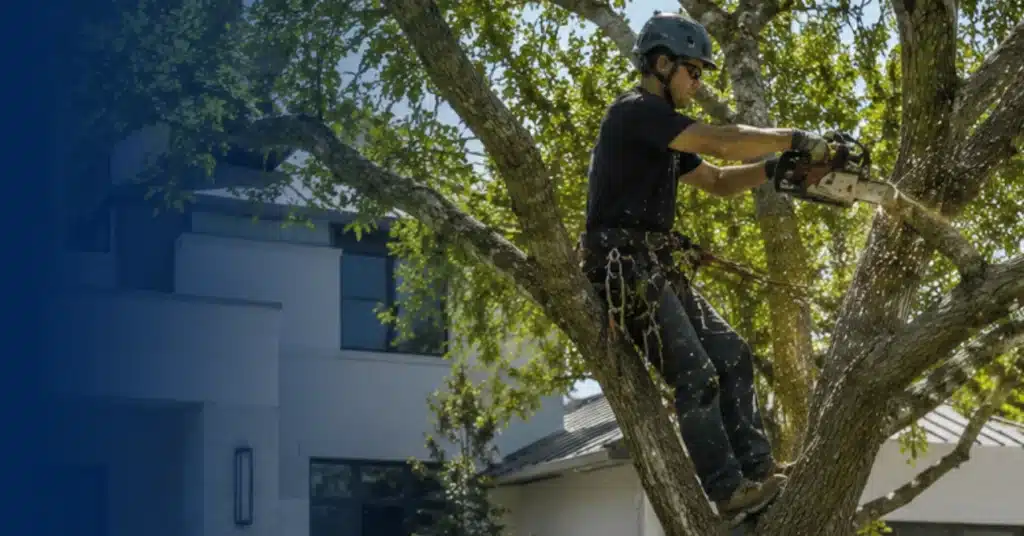
Tree pruning is the careful trimming of branches to improve tree health, control size, and reduce hazards. For commercial properties, pruning can mean cutting back limbs that interfere with signs, clearing branches from parking lots, removing dead wood that could fall on customers, or thinning canopies to improve light and air for nearby landscaping.
You might need pruning when you notice cracks or large dead limbs, when branches rub against buildings or power lines, or when a tree’s shape is crowding sidewalks and entrances. Proper pruning keeps trees healthier, cuts down on emergency work after storms, and helps your landscape look intentional rather than overgrown.
How Commercial Tree Pruning Is Assessed Before Work Begins
On arrival our arborist walks the property with you or your manager to assess each tree’s pruning needs. We look at branch structure and wound history, check for dead or hanging limbs, and note any tight unions that could split in wind. We’ll also mark branches that interfere with signs, lighting, or vehicle sightlines so you can see what will be removed.
We pay close attention to how the space is used daily. Areas with heavy foot traffic or parked cars get a different approach than a lawn or bio-retention zone. For trees near loading docks or building entrances, we evaluate clearance heights and sightlines to minimize disruption while keeping safety top of mind.
Access and staging matter for the crew and equipment. We identify safe rigging points, truck placement zones, and any overhead wires before work starts. If access is tight, we’ll recommend pruning in sections or using smaller equipment to protect pavements and landscaping.
Finally, we explain the pruning goals and expected outcomes on site. You’ll hear why we retain particular branches, which cuts support future strength, and where we aim to improve airflow or light. That way you can make informed choices before we schedule the job.
Common Pruning Needs on Commercial Properties
Retail plazas often ask for pruning to keep tree branches off storefront signs and awnings. We trim low limbs that block window displays and prune canopy edges so building-mounted lights and security cameras have clear sightlines. That prevents shading that can make a business look closed and avoids branches scraping paint or cracking fixtures during wind.
Parking areas and drive aisles need predictable clearance for trucks and delivery vans. Managers call us when branches hang low over parking stalls or when sightlines at exits are obscured by foliage. We focus cuts that improve driver visibility and reduce leaf drop onto curbs, drains, and fuel pumps.
Sidewalks, outdoor dining, and customer paths create different priorities. Dead wood over a walkway is handled quickly because it’s a direct liability to pedestrians. For patios and seating areas, we thin canopies to let light in while keeping shade where patrons want it. Those small decisions change how safe and inviting a public space feels.
Pruning Methods That Support Tree Health and Site Safety
Selective crown thinning removes crowded branches to let wind pass and light reach lower limbs. You’ll notice less sway in big storms and fewer broken limbs afterward. On commercial sites, thinning also reduces leaf and fruit drop onto walkways and storefronts, which lowers slipping hazards and maintenance needs.
Deadwood removal targets brittle, cracked, or fungal-damaged limbs that pose a clear falling risk. These cuts are prioritized over aesthetic shaping because a single dropped limb can close an entrance or damage a vehicle. Property managers often call us when they spot large standing dead branches or when maintenance crews report recent breakage after a storm.
Crown reduction and clearance pruning control overall size and clearances without leaving stubby, unhealthy cuts. We reduce length on long lateral branches that hang over roofs, signs, or traffic lanes. That keeps tree form intact while preventing repeated strikes against structures and service lines.
Finally, targeted lift pruning improves pedestrian and vehicle sightlines by removing low growth without stripping the canopy. This helps lighting and security cameras work properly and makes walkways feel safer. For most commercial properties, a mix of these methods protects the trees and reduces predictable hazards.
What Can Affect Commercial Tree Pruning Cost
Tree size and canopy spread are the first things that change a commercial pruning estimate. Larger trunks and wide crowns need more time aloft, bigger cuts, and often specialized rigging. A single 80-foot oak with heavy scaffolding needs far more crew hours than a row of small street trees trimmed to clear signs.
Access and staging shape how we work and what equipment we bring. Tight courtyards, narrow alleys, or delicate pavers push the crew toward smaller chippers and more hand work. When trucks and cranes can’t park close by, labor rises because crews must haul cut material farther from the tree.
The condition of the wood matters for both safety and cost. Dead, rotten, or diseased limbs require cautious removal and extra rigging to control unpredictable breaks. High-risk cuts near entrances, loading docks, or utility lines take longer because we use additional safety measures and often assign more crew for controlled lowering.
Scope and cleanup expectations also affect the price. Simple clearance pruning is quicker than structural pruning that reshapes a canopy. Likewise, leaving wood on site for mulch or requiring total haul-away changes disposal time and equipment needs. We’ll walk these options with you so estimates reflect your priorities.
How to Prepare Your Property for a Pruning Visit
Before our crew arrives, walk the property and note trouble spots where pruning matters most. Point out low limbs over loading bays, branches brushing building facades, and any trees near customer entrances or outdoor seating. Take photos with your phone if that’s easier—images help the arborist spot clearance needs and tailor recommendations before they start work.
Clear immediate access routes where possible. Move planters, trash bins, and parked cars out of staging zones so trucks and chippers can park close and crews can work safely. If you can’t move items, tell us where they sit so we arrange smaller equipment or a different work plan to avoid damage.
Plan around peak customer times and staff schedules to reduce disruption. For example, schedule pruning for early mornings or slow weekdays if your property has heavy midday traffic. Let tenants and maintenance staff know roughly when we’ll be on site, and flag any sensitive areas like pop-up vendors or fenced utility vaults before we begin.
Scheduling Commercial Tree Pruning With Route 288 Tree Service
When you call to schedule commercial tree pruning, have a few simple details ready. Tell us which trees need attention, where they are on the property, and any immediate concerns like limbs over entrances or visible dead wood. Photos are very helpful—snap a couple from the ground so we can spot clearance needs and potential hazards before the visit.
Expect a short follow-up so we can confirm access and talk staging preferences. We’ll ask about tenant hours, delivery windows, and any sensitive landscaping you want protected. That helps the crew pick arrival times and equipment that minimize disruption to customers and staff.
After we agree on scope, we’ll schedule a convenient date and confirm who will meet the crew on site. Your point person can be a facilities manager, property owner, or on-site manager. On arrival the crew leader will review the work areas with them and note any last-minute adjustments.
If you want, ask for recommendations during that call—like whether selective thinning or clearance pruning better fits your goals. We’ll give straightforward guidance so you can decide without pressure, then lock in the appointment once you’re comfortable.
Frequently Asked Questions
How do you assess which branches to prune on a commercial property?
Our crew starts with an on-site walk with your manager to inspect branch structure, wounds, and dead wood. We mark branches that interfere with signs, lights, or sightlines and explain which cuts improve safety or tree strength. Access, daily use of the area, and staging needs also guide which branches we target during pruning.
What common problems on commercial sites usually require pruning?
Low limbs over storefronts, branches blocking parking aisles or delivery routes, and dead wood above sidewalks are the most frequent triggers. Managers also request pruning when trees shade security cameras or drop debris onto outdoor seating and entryways. Each situation gets a focused recommendation based on the specific hazard or functional need.
Which pruning methods do you use to protect tree health and reduce hazards?
We use selective crown thinning to reduce wind stress and thinning that lowers leaf and fruit drop onto walkways. Deadwood removal comes first when limbs pose falling risks, and crown reduction or lift pruning preserves form while creating clearances. The crew balances cuts so trees remain healthy and site risks fall where they can be managed.
What factors most affect the cost of commercial tree pruning?
Size and canopy spread, access and staging, condition of the wood, and the overall scope of work are the biggest cost drivers. Tight courtyards or high-risk cuts near entrances or utilities raise labor and equipment needs, while cleanup choices change disposal time. We review these items on site so estimates reflect the actual work required.
How should I prepare my property before the pruning crew arrives?
Walk the site and note problem trees or take photos to send before the visit; that speeds assessment and planning. Clear planters, parked cars, and obvious staging areas when possible, and tell us tenant hours or delivery windows to avoid disruption. Let the crew leader know who will meet them and any sensitive zones to protect on arrival.
We’ll handle the rest.