





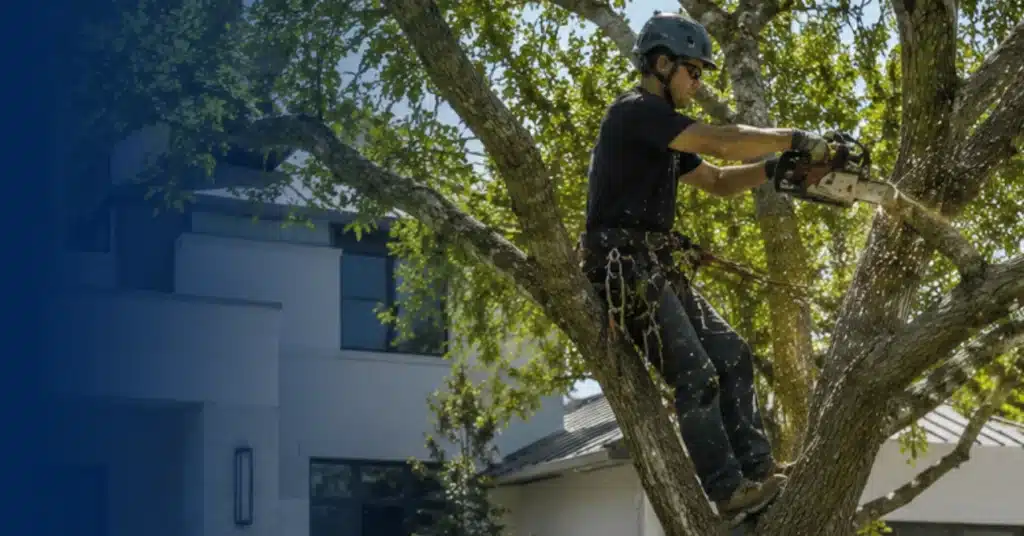

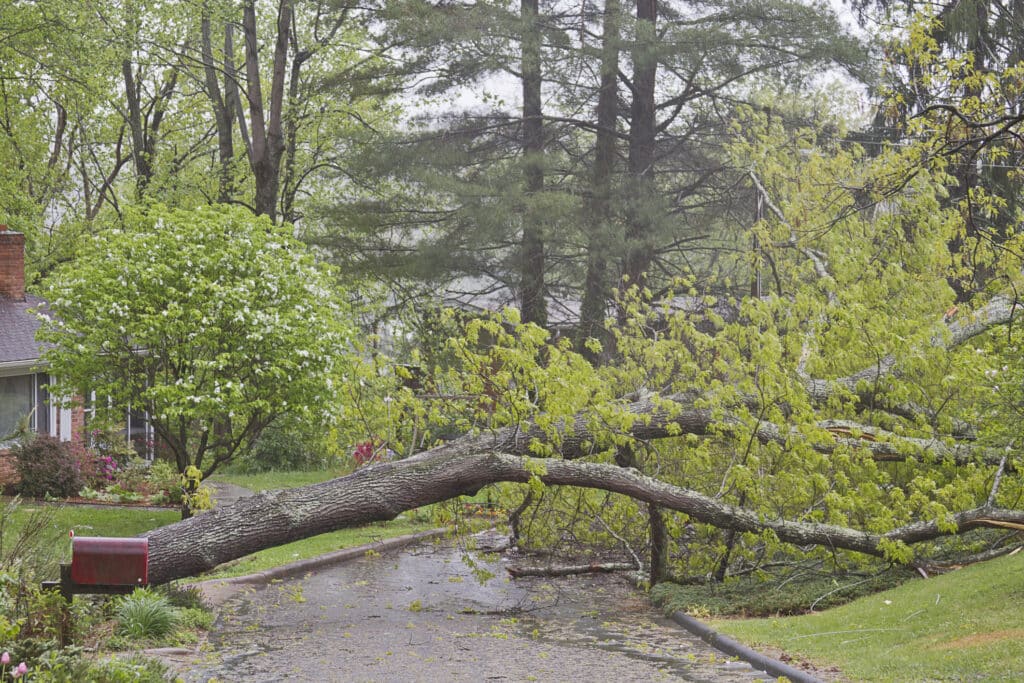
Key Takeaways About Storm Damaged Tree Removal
Storm damage to trees includes root loss, trunk cracks, and limb failure after heavy spring storms. This summary helps homeowners and property managers decide when action matters for safety and property protection.
- Identify leaning trunks and fresh root lift after storms quickly.
- Prevent further decay by keeping people away and documenting damage.
- Avoid DIY removal when branches contact power lines or structures.
- Spot fungal fruiting bodies cavities and cracking bark during inspections.
- Reduce risk by recording photos measurements and recent changes.
- Plan professional inspection timing before scheduling any major work.
Introduction
Spring storms in Virginia can damage trees in ways that are not always obvious at first glance. Heavy winds and saturated soil combine to loosen roots and crack trunks. Homeowners often notice leaning trunks, sudden branch loss, or cracking sounds after a storm. These signs matter because weakened trees can fail later without further warning.
Wind-driven rain adds weight to leaves and branches, increasing limb stress during gusts. Extended wet periods soften the soil and reduce root anchorage around large trees. Fungal decay or hidden root rot can accelerate after storms and weaken structural wood. Recognizing these underlying problems helps determine whether a tree can recover or must be removed.
Visible hazards include large split limbs, open wounds in the trunk, and roots pulled from the ground. Less obvious issues show as gradual canopy thinning, delayed leaf-out, or repeated limb drop over weeks. For properties in Short Pump, VA these subtle signs often precede a sudden failure. Ignoring them raises the risk to people, buildings, and vehicles nearby.
When removal becomes necessary depends on stability, disease extent, and proximity to structures. A professional inspection can confirm whether a tree is a continuing hazard or can be salvaged. Homeowners in Glen Allen, VA should document observable damage and limit access near compromised trees until assessed. Acting on clear danger reduces injury risk and larger property damage down the road.
How Spring Storms Weaken Tree Roots And Trunks
How spring storms weaken tree roots and trunks means wind, water, and existing decay reduce a tree’s structural support. Wind forces twist trunks and spread fractures along grain lines, which can start beneath bark and grow unseen. Saturated soil lowers friction around roots, making large trees more likely to lean or topple. Homeowners often ask whether a leaning tree will recover; a professional check of root lift and trunk movement answers that clearly.
- Wind-driven root plate movement loosens anchorage.
- Saturated soils reduce rooting depth temporarily.
- Repeated gust cycles cause progressive trunk cracking.
- Hidden decay accelerates after mechanical injury.
Roots suffer when prolonged rain reduces soil strength and cuts oxygen to fine roots near the surface. Loss of fine roots lowers water uptake and weakens the anchor network that stabilizes the root plate. Inspectors look for root flares pulled above ground and exposed roots that show tearing or fresh soil displacement. In Short Pump, VA homeowners may notice a change in slope or soil heave at the base after heavy storms.
Trunks show internal weakening through surface cracks, loose bark, or visible cavities after storms strike. Professionals check for fresh wood fibers, vertical splits, and separation between the root collar and trunk to gauge structural integrity. A common homeowner question asks how pros confirm hidden weakness; they use visual inspection, sounding with a mallet, and measurements of lean to confirm risk. For detailed guidance and scheduling a professional assessment, see the Route 288 Tree Service resources page.
Storms also accelerate disease spread when wounds let fungi into the wood and roots, creating decay zones that grow over months. Decay reduces load-bearing cross-section and concentrates stress where branches attach or where the trunk narrows. Inspectors document decay extent and run simple pull or stability checks before recommending retention or storm damaged tree removal. In Glen Allen, VA properties, prompt documentation and restricted access protect people and structures while decisions proceed.
Common Weather Causes Of Structural Tree Damage
Summer-like gusts in spring storms create sudden bending forces that strip large limbs and change load paths on remaining branches. When a major limb is lost, adjacent branches take extra weight and can fail in subsequent winds. Rain-driven weight increases the chance that crotches with included bark will split under pressure. Homeowners may hear loud pops during gusts that indicate a high risk of structural failure.
Hail and ice in some spring systems can bruise bark and damage small branches, opening entry points for decay organisms over weeks. Surface wounds that look minor can lead to internal fungal colonization when wet weather continues. Inspectors look for callus growth patterns and discolored wood around wounds to estimate how long decay has progressed. In Short Pump, VA, these small injuries often accumulate on early leaf growth and worsen through the season.
Prolonged heavy rain can change soil grade around roots and expose shallow root systems that anchor the trunk sideways. Exposed roots dry and crack, reducing their tensile strength and increasing the chance of uprooting. Professionals check root flare exposure and probe soil firmness with a soil bar or hand trowel to assess anchorage. For properties in Glen Allen, VA, soil washout near foundations can make root exposure more obvious to homeowners.
Lightning strikes and sudden trunk strikes create internal fractures that are not always visible from the outside but weaken structural continuity. Inspectors perform sounding with a mallet and take photos of bark separation to record suspected strike damage. Recorded photos and written notes help decide whether a tree needs immediate removal or can be monitored. For a list of local coverage and service areas, see the service areas page when arranging an inspection.
Recognizing Visible Signs Of Internal Decay
Look for discolored or sunken bark patches that suggest wood beneath is failing; these often appear near wounds or branch unions. Soft, spongy wood under bark indicates decay progressing inward and reduces the tree’s load capacity. Homeowners in Short Pump, VA often first notice these patches while inspecting storm wounds on lower limbs. If you see fungal fruiting bodies or wet, dark streaks, document them with photos for a professional review.
Another sign is a cavity with smooth, rounded edges where inner wood has been eaten away over time. Cavities that form on the trunk or large limbs change how stress travels through the tree and increase the chance of sudden breakage. A simple probe with a non-powered screwdriver can reveal thin shell wood over a hollow, but avoid deep probing that harms healthy tissue. Record the cavity’s size and location for the assessor to compare during the written report.
Look for vertical cracks that run along the grain and create separation between bark and wood; these cracks can hide deep decay. When you tap the trunk near a crack, a hollow sound often confirms internal loss of density and support. Professionals will also check branch unions and cambium growth patterns where included bark can hide internal rot. If splitting or displaced bark appears after a storm, keep people and vehicles clear until confirmed safe.
Foliage symptoms add clues: dieback starting at branch tips, sparse new leaves, or leaves that brown early can point to internal decay reducing sap flow. A moisture meter reading in the root flare and trunk base helps professionals correlate surface symptoms with internal conditions. In Glen Allen, VA properties, combining visible symptoms with measured readings gives a clearer picture for deciding on storm damaged tree removal. Consult a professional for a full inspection and documented findings before taking action.
Identifying Danger Indicators For Immediate Action
Rapid leaning changes after a storm often mean immediate risk and need quick action to evaluate stability. Look for sudden new lean that appeared within hours or days after heavy wind. Fresh root lift with visible soil displacement indicates the anchor points failed during the event. Homeowners in Short Pump, VA should keep people and equipment away from any tree that suddenly tilts.
- Fresh trunk splits showing white wood.
- Large hanging limbs with visible cracking.
- Root plates that have lifted or rotated.
- Obvious trunk cavities with loose wood.
Crack propagation sounds are a clear danger indicator if heard after a storm and must prompt evacuation of the area. If you notice new leaks of sap or dark streaks down the trunk, these suggest internal failure advancing toward the surface. A professional will use visual checks, sounding with a mallet, and simple measurements of lean to confirm hazard level. For more homeowner guidance on documenting storm effects and preparing for an inspection, see the blog page.
Electrical or structural contacts increase urgency when branches touch power lines or buildings and create an immediate hazard. In those cases, do not attempt removal yourself and call the appropriate utility or a qualified tree professional. During assessment, professionals will also check root flare exposure and probe the trunk near breaks to judge remaining strength. For properties in Glen Allen, VA, prompt documentation and restricted access limit injury and property loss while decisions proceed.
Storm Damaged Tree Removal When To Consider
Deciding on storm damaged tree removal starts with evaluating whether the tree poses an ongoing risk to people or structures within its drop zone. If damage compromises the main stem or several large limbs, removal often becomes the safer option than repeated pruning and monitoring. A homeowner should consider removal when predictable failure paths point toward homes, driveways, or frequent foot traffic. In Short Pump, VA properties, visible load shifts toward buildings usually justify removal to prevent greater loss.
Another consideration is the extent of internal decay that leaves too little load-bearing wood to support the canopy under future storms. When decay occupies a large cross-section of the trunk or key limb unions, the remaining sound wood may not tolerate seasonal wind and wet events. Professionals compare decay size to trunk diameter and factor in crown weight before recommending removal. For properties in Glen Allen, VA, combining decay measurements with canopy weight guides safer decisions.
Repeated failures or progressive structural decline also make removal the prudent choice because repeated repairs reduce long-term tree health and increase ongoing risk. If a tree sheds major limbs over multiple storms, the remaining structure often develops compensatory weaknesses that lead to sudden failures. Consider removal when the tree’s useful lifespan, safety margin, and maintenance costs no longer justify keeping it. Documenting each failure with photos helps professionals assess cumulative damage during the written report.
The condition of roots and soil anchorage influences the removal decision when uplift, root loss, or soil collapse weaken the entire root plate. Trees with detached or rotated root plates usually cannot be stabilized without full removal, especially near foundations or walkways. A professional will probe soil firmness and measure root flare stability to confirm that remediation is not practical. If removal is chosen, schedule it to avoid wet conditions that increase hazards and complicate safe access to the site.
What Professionals Check During Damage Assessment
Inspectors begin by mapping the tree’s drop zone and recording which targets fall within potential failure paths, including buildings and utilities. They measure trunk diameter at chest height and note the location and size of visible wounds for later comparison. A professional will check branch attachment angles and crown asymmetry to estimate future loading during storms. In Short Pump, VA homeowners should provide recent photos that show storm-related changes around the property.
Next, assessors probe the base and root flare with a moisture meter and a soil probe to check for root loss or decay near the collar. They also perform sounding on the trunk and large limbs using a mallet to detect hollow areas or delamination. Measured lean angles and any recent change in lean help quantify instability for a written recommendation. For properties in Glen Allen, VA inspectors often note nearby soil disturbance that affects anchorage.
Professionals inspect wounds and fungal signs, photographing fruiting bodies, cracks, and cavities to document internal decay progression. They may take resistance readings with a handheld device or record hollow sounds to support their findings in a report. The assessor evaluates whether remaining sound wood is sufficient to support the crown under typical Virginia spring storm forces. These diagnostic steps form the basis for recommending storm damaged tree removal or continued monitoring.
Finally, the inspector considers access and safety for any corrective work, noting overhead utilities, slopes, and nearby structures that change removal risk and method. They create a written report with photos, measured values, and clear recommendations for removal, pruning, or monitoring. Homeowners receive explicit next steps and timing guidance to reduce immediate hazards and plan safe work. For more homeowner guidance on preparing for an inspection and scheduling follow-up, see the blog.
Preventive Measures To Strengthen Trees Prestorm
Start by maintaining healthy structure months before storm season through targeted pruning that removes competing leaders and tight crotches. Focus cuts on removing small codominant stems and reducing long, heavy limbs to rebalance the canopy. Always prune to a lateral branch at an appropriate angle to promote strong regrowth without leaving stubs. For safety and correct technique, hire a qualified arborist for major structural pruning near homes or utilities.
- Thin crowded branches to reduce wind sail.
- Remove deadwood to cut weight and failure risk.
- Shorten long limbs to lower leverage on the trunk.
- Clear lower branches near roofs and driveways.
Correcting soil compaction and improving root health strengthens anchorage before heavy rains arrive. Aerate compacted lawn soil carefully beyond the root flare and add organic mulch two to four inches deep. Avoid piling mulch against the trunk which can trap moisture and invite decay organisms. In some cases, targeted root pruning or adding structural soil can redirect roots away from foundations and improve stability.
Regular inspections catch early decline that pruning cannot fix and inform decisions about future storm damaged tree removal. Use seasonal checks that note bark damage, fungal fruiting bodies, and changes at the root flare, then document findings with dated photos. A professional assessment with sounding, moisture readings, and measured lean gives concrete data to plan reinforcement or removal. Homeowners in Short Pump, VA or Glen Allen, VA should keep records to support safe timing of any corrective work and scheduling through the blog.
Homeowner Steps After Storm For Safe Recovery
After a storm, start by securing the area and keeping people and pets away from damaged trees until inspected. Walk the property perimeter at a safe distance and note any new hazards you can photograph for a professional. Do not touch hanging limbs or attempt to cut large branches without training and proper equipment. If branches contact power lines, contact the utility before any work proceeds to avoid electrocution risk.
Document damage with dated photos showing trunk wounds, root exposure, and canopy changes for the assessor’s written report. Take close-ups of cracks and cavities and wide shots that show the tree relative to structures or vehicles. These images help a professional determine whether to recommend storm damaged tree removal or staged pruning. Keep records organized so the assessor can reference them during the inspection.
Limit access to the tree’s drop zone and mark it with visible barriers to prevent accidental entry while waiting for evaluation. Move vehicles and outdoor furniture away from potential fall paths to reduce future property loss. If soil is soft from rain, avoid driving heavy equipment near the root flare to prevent further root damage. For guidance on preparing for a professional visit, consult the Route 288 Tree Service blog for homeowner checklists and preparation tips.
When the arborist arrives, be ready to describe recent changes and share your photos for comparison to on-site findings. Professionals will perform noninvasive checks like visual mapping, sounding with a mallet, and measuring lean angles to judge stability. Ask for a written recommendation that explains options, timing, and safety concerns so you can decide on storm damaged tree removal or monitoring. In Short Pump, VA or Glen Allen, VA properties, follow the assessor’s safety timeline before allowing normal access again.
Frequently Asked Questions
How do spring storms weaken a tree’s roots and trunk?
Spring storms saturate soil and increase root rot risk by reducing oxygen and encouraging fungal growth around roots. Fast winds and saturated ground let trees lean, break anchoring roots, and create hidden soil heave. Repeated heavy rain and wind cause trunk cracks, torn bark, and internal decay that weaken structural core. If you see large splits, root exposure, or tilting, exercise caution and contact a professional for inspection and possible storm damaged tree removal.
When should I consider storm damaged tree removal?
Consider storm damaged tree removal when a tree has large split limbs, a leaning trunk, or root uplift that threatens structures or people. Visible cavities, extensive crown loss, or fresh cracking often indicate internal failure and higher collapse risk. If the tree contacts power lines or blocks an exit, treat it as an immediate hazard and avoid the area. For any significant risk, exercise caution and hire a qualified professional to assess and perform removal safely.
What visible signs mean a tree may fail later?
Look for large cracks in the trunk, splitting limbs, or bark that peels away in long strips after the storm. Leaning that develops or worsens over days suggests root or soil failure and increased collapse risk. Dead branches, sparse new leaves, or fungal fruiting bodies at the base indicate internal decay that can lead to sudden failure. If you spot these signs, exercise caution near the tree and contact a professional for an inspection and possible storm damaged tree removal.
How does an inspector confirm hidden decay or hollow wood?
An inspector starts with a visual survey for fungal fruiting bodies, cracks, and abnormal bark movement that suggest internal decay. They probe suspect areas with an awl or increment borer to collect core samples and check for soft, crumbly wood. A sounding test using a mallet helps locate hollow sections by changes in tone and vibration during inspection. If risk to people or property exists, stop work and hire a professional arborist experienced in storm damaged tree removal for safe evaluation and next steps.
What immediate safety steps should homeowners take?
Keep people and pets away from the damaged area and set up visible barriers if possible to prevent accidental access. If power lines are down or touching branches, stay inside and call the utility company immediately and do not approach. Photograph the damage for documentation, then contact a qualified arborist to assess hazards and discuss storm damaged tree removal if needed. If large limbs hang over structures or the tree shows root failure, treat it as an emergency and hire a professional with proper equipment.