






Key Takeaways About Emergency Tree Removal
Emergency tree removal covers the urgent removal of trees or large limbs that pose immediate danger after wind damage. This summary is for homeowners and property managers needing quick guidance right after a storm.
- Identify unstable trees showing fresh cracks or sudden leaning.
- Prevent access to the hazard area to protect people and pets.
- Avoid touching downed limbs near power lines or damaged utilities.
- Spot hanging limbs and hooked branches over roofs or walkways.
- Reduce risk by documenting damage with photos and notes.
- Plan to share observations with the crew for faster triage.
Introduction
When a severe windstorm snaps or uproots a large tree, the scene can feel chaotic and unsafe. Fallen limbs can block driveways, crush fences, or damage roofs and vehicles. Homeowners often face urgent choices about safety, cleanup, and property protection. Knowing what to expect helps reduce stress and focus on practical next steps.
Major hazards include unstable trunks leaning against structures and downed power lines hidden under branches. These situations create immediate safety risks that require professional assessment. Visible damage may only tell part of the story about root failure and hidden splits. Responding quickly prevents secondary damage from rain or shifting loads.
Insurance, municipal rules, and neighbor concerns usually enter the picture after the initial shock. Documenting the scene with photos and notes can help later conversations with adjusters. Expect visits from emergency crews or inspectors if public utilities or roads are affected. Clear records make those interactions smoother and more effective.
Homeowners in Midlothian, VA and Mechanicsville, VA often report the same worries after storms: how to protect structures and how long recovery will take. A professional crew will check for hazards, secure the area, and outline the removal process. Understanding the likely steps reduces delays and helps prioritize safety over haste.
How Wind Damages Trees And Why It Happens
Wind damages trees by exerting lateral and uplift forces that the trunk, branches, and roots cannot resist. Strong gusts bend crowns and twist trunks, causing cracks, root pulling, and whole-tree uprooting. Homeowners often ask whether a tree that looks intact still needs removal, and professionals say hidden root or trunk damage can make it unsafe. In Midlothian, VA property owners notice that sudden canopy loss increases wind load on remaining branches immediately after storms.
- Wind speed and gust duration matter.
- Tree species and wood strength differ.
- Root health and soil saturation influence stability.
- Previous pruning or wounds change failure risk.
- Nearby structures alter load paths on trees.
Wind affects trees differently depending on species, shape, and wood condition. Shallow-rooted trees and those with heavy crowns take larger overturning moments in storms. Saturated soil reduces root adhesion and raises the chance of uprooting during prolonged rain and wind. A homeowner asking if visible splits matter should know internal fractures often spread beyond what can be seen.
Tree architecture also changes how damage shows up after an event. Decaying heartwood can allow the outer shell to stay attached despite internal failure, which creates hidden hazards. Cankers, root decay, and previous limb loss concentrate stress at weak points during gusts. Mechanicsville, VA residents commonly observe leaning trunks or cracked unions after windy storms that start small and worsen quickly.
Professionals diagnose wind damage by checking visible wounds, root plates, and trunk stability with simple tests. They look for soil heave, exposed roots, vertical cracks, and separation at branch collars as diagnostic clues. Inspectors may use photos, recorded footage, and a written report to document findings and recommend emergency tree removal when structural failure is likely. For more guidance on post-storm options, homeowners can review resources at Route 288 Tree Service.
Common Tree Failure Modes Homeowners Should Know
Trunk failure often shows as vertical splits, bark separation, or sudden leaning that gets worse over hours. Homeowners may notice a crackling sound as wood fibers fail under stress. A professional inspects the split length, checks for internal cavities with a visual probe, and tests for movement under light pushes. If the trunk damage compromises the main support, emergency tree removal is usually recommended to prevent collapse onto structures.
Crown or limb failures create large hanging branches and jagged breaks that shift load onto remaining limbs. Look for branches that pivot at the union or have torn bark where they join the trunk. During an assessment, a technician will check attachment strength, look for buried decay, and try small pulls on suspect limbs to detect hidden rot. Hanging masses over roofs or driveways frequently trigger an immediate need for emergency tree removal to reduce collapse risk.
Root plate failure occurs when a tree uproots partially, leaving a tilted mass with exposed roots and a lifted soil wedge. Soil heave, torn roots, and a tilted lean are clear signs the anchoring failed, even if the crown looks mostly intact. Inspectors examine root loss depth, soil saturation, and adjacent sidewalk or foundation cracking to judge stability. Properties in Midlothian, VA may see this after heavy rain, and professionals often advise removal if the root plate will not reestablish a secure anchor.
Branch union failure happens at weak crotches where included bark or narrow angles concentrate stress and split outward under wind load. Bark inclusion creates a hidden separation that often shows as a slow-opening gap or a change in branch angle over days. A pro will use a sounding method, visual inspection of the collar, and sometimes basic leverage checks to confirm the union weakness. For homeowners in Mechanicsville, VA, visible separation at unions over living spaces commonly leads to planning for emergency tree removal to eliminate immediate threats.
Warning Signs To Spot After Severe Wind Events
After a storm, check for fresh wood debris piled against structures or under branches that look intact but shifted. Look for new holes or gaps at branch collars where bark has separated from wood. Smell of damp rot or a musty odor near the trunk can indicate internal decay exposed by wind. If you see soil heave near the base, avoid standing under the canopy until a pro evaluates stability.
Watch for sudden changes in tree posture over hours or days, such as a slow increasing lean toward a house or driveway. Tension cracks that open along the trunk or major limbs usually worsen with wind and warrant prompt attention. Also note any creaking or popping sounds that continue after the storm, which suggest ongoing structural movement. Photograph these signs to document progression for insurance and for the emergency tree removal assessment.
Inspect the root line for new exposed roots, torn root tips, or lifted turf that did not exist before the wind event. Compromised roots reduce anchorage and can allow a tree to fail without warning on calm days. Professionals often probe around the root flare and check soil moisture and root loss as part of a diagnostic inspection. Homeowners in Midlothian, VA should mark hazards and keep pets and children away until cleared.
Look upward for hanging or hooked limbs that did not fully break and now form a pulley over walkways or roofs. These suspended masses can release under small loads, creating delayed collapse risks that require removal. A licensed crew will use rope rigging and aerial assessment to confirm load paths before cutting. Residents of Mechanicsville, VA should report visible threats promptly to reduce damage and liability.
Immediate Safety Steps Before Calling Professionals
After a damaging wind event, move people and pets away from the affected tree to a safe distance until a pro inspects the scene. Do not attempt to climb the tree or pull down hanging branches yourself because loads can shift unpredictably. Keep clear of any area where a trunk or large limb could pivot and fall toward structures or vehicles. If you smell gas or hear a hissing near a fallen tree, evacuate and call emergency services immediately.
- Keep children and pets indoors and away from the hazard area.
- Turn off outdoor electrical equipment near the tree.
- Mark the hazard with visible tape or cones if safe to do so.
- Take photos from a safe distance for insurance documentation.
If power lines lie under or across limbs, do not touch them and keep others away until the utility responds. Report downed lines to the utility and do not try cutting branches that contact energized wires. Use your phone to document which limbs touch lines and their approximate locations from a safe vantage point. Utility crews often need clear access and may direct the removal sequence around safety zones.
Protect exposed roof or siding damage temporarily with tarps only if you can do so safely from the ground or a low ladder. Avoid standing directly below any hanging debris while securing a tarp or covering a broken window to prevent falling fragments. Photo the temporary repairs and note any timestamps to help insurance conversations later. For larger roof breaches, expect professionals to advise a staged approach that prioritizes human safety first.
Collect simple diagnostic details to share with the crew when you call for emergency tree removal, such as trunk lean degree, visible splits, and root exposure. Note sounds like ongoing cracking, which suggests an unstable condition that requires immediate attention from climbers and rigging crews. A professional will ask for your photos and descriptions to triage the response and prepare appropriate equipment before arrival. Homeowners in Midlothian, VA and Mechanicsville, VA should keep this information ready to speed safe resolution.
When To Call A Professional Emergency Tree Removal
Call for emergency tree removal when the tree poses an immediate threat to people, structures, or access routes and cannot wait for regular scheduling. Give the dispatcher clear details about leaning direction, visible splits, and any suspended limbs to help them prioritize response. If branches rest on a roof or vehicle and continue to shift, request urgent attention to prevent progressive collapse and secondary damage. Expect the crew to ask for photos and live descriptions to prepare necessary rigging and equipment before arrival.
If a tree contacts electrical lines or you smell burnt insulation, wait for the utility to de-energize the area before any cutting occurs. Dangerous interactions with power lines change the removal method and require coordination that delays removal until the site is safe. Do not assume a fallen line is de-energized; keep a safe perimeter and inform the crew about any utility involvement when they arrive. The team will coordinate with the utility or emergency services as part of the work plan.
Request emergency removal when a tree shows rapid deterioration after the storm, such as growing creaks, widening trunk cracks, or sudden loss of anchor underfoot. A professional will perform a quick stability test, measure lean, probe the base, and photograph weaknesses to decide if immediate removal is required. They may also recommend temporary bracing or cordoning off the area while arranging full removal when hazards are intermediate. In some cases, staged removal reduces risk while allowing safe access for crews and neighbors.
Contact a certified arborist or experienced crew if large hanging limbs threaten entryways, utilities, or parked vehicles and you need planned but prompt removal to protect property. Homeowners in Midlothian, VA often call after seeing hooked limbs over roofs that could fall during normal activity. For properties in Mechanicsville, VA, delayed action can increase liability and repair costs, so document conditions and request a rapid site inspection. Include any photos and notes collected after the storm to help the team triage and schedule emergency tree removal efficiently.
What Professionals Check During Emergency Assessments
Technicians begin with a visual sweep to map hazards and decide access paths for crews and equipment. They record trunk defects, visible root loss, and hanging limbs with photos for a written report. Inspectors also listen for ongoing creaks or sounds that indicate active movement needing immediate control. This quick mapping helps define safe work zones and staging areas before any cutting starts.
Next, professionals perform hands-on stability checks using simple leverage and push tests at the trunk and major limbs. They probe the root flare and check for soil heave and exposed roots to evaluate anchorage strength. A climber may perform an aerial inspection to confirm attachment points and look for hidden splits from above. These steps inform whether a controlled drop, sectional removal, or full emergency tree removal is safest.
Crews evaluate nearby structures, roofs, and vehicles to plan rigging, pick points, and block potential drop zones. They identify utility conflicts and coordinate with utility crews if lines are involved before cutting begins. Photographs and measurement notes document distances and lean angles that affect the removal sequence and equipment choice. Homeowners in Midlothian, VA should expect professionals to discuss these constraints and explain planned protective measures.
During the assessment, inspectors also check for secondary risks like saturated soil and nearby excavation that reduce root support. They may use a moisture meter and visual records to report on soil conditions and root exposure for insurance or repair planning. If suspected internal decay exists, a pro will note it and recommend follow-up evaluation or removal to avoid delayed failures. Residents of Mechanicsville, VA often find this diagnostic detail helpful when discussing timelines and safety steps with crews.
Typical Emergency Tree Removal Process And Timelines
After the assessment, crews usually set a clear removal strategy and timeline based on access, risk level, and equipment needed. The team will stage barriers and assign roles, with climbers, ground crew, and a rigging lead coordinating cuts. Expect the initial stabilization to take the first hour on most residential jobs, especially when large limbs hang over structures. Weather and utility coordination can extend that stage before active removal begins.
- Secure the work zone with tape and cones.
- Remove small debris first to clear access.
- Use rope rigging for controlled sectioning.
- Lower large pieces onto trucks or designated areas.
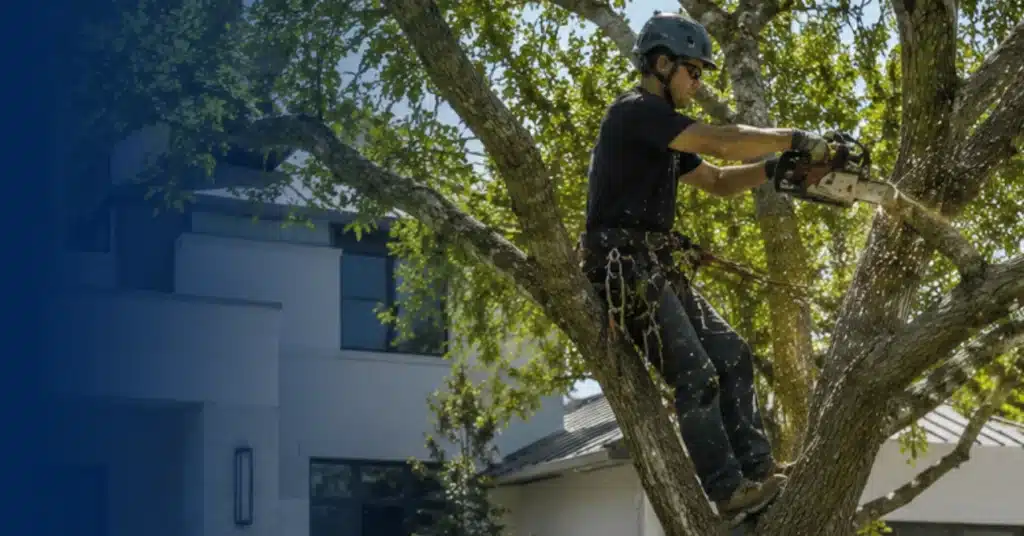
Sectional removal is common when trees stand near houses or vehicles to limit impact from falling wood. Crews climb and cut larger limbs into manageable sections, then lower them with ropes to avoid roof damage. A ground crew processes wood into chips or haulable logs as sections arrive, which keeps the site organized. This method usually takes several hours depending on trunk diameter and canopy complexity.
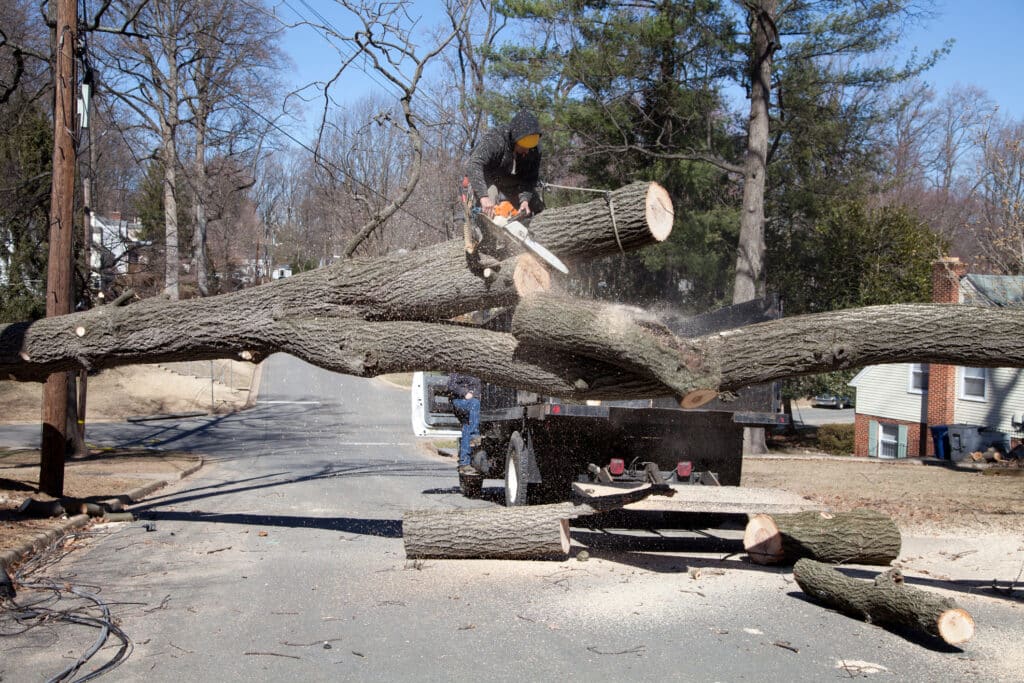
When a tree has fallen and blocks access, crews focus on clearing safe paths and removing heavy pieces first to reopen driveways. Chainsaw teams cut the trunk into transportable lengths while a loader removes debris to a chipper or truck. If the tree contacted utilities, crews coordinate with the utility before cutting near lines, which may delay active cutting. Homeowners in Midlothian, VA often ask for an estimated clear time when access is a priority.
Final steps include stump evaluation, site cleanup, and homeowner walk-through to confirm concerns are addressed. Stump removal or grinding is scheduled based on homeowner preference and equipment availability, often on a different day. Technicians provide written notes or photos documenting completed work and any remaining hazards for insurance use. For follow-up scheduling or questions about services, contact Route 288 Tree Service to arrange next steps in Mechanicsville, VA.
Preventive Tree Care To Reduce Future Wind Damage
Create a regular pruning plan focused on removing deadwood and reducing sail area in the upper crown to lower wind loads. Pruning improves weight distribution and reduces large pendulum limbs that cause sudden failures. An arborist typically schedules thinning cuts in stages to avoid over-pruning and shock to the tree. Homeowners should expect follow-up inspections after heavy storms to adjust the plan as trees respond.
Address root-zone care by avoiding compaction and maintaining a moderate mulch ring to keep roots healthy and anchored. Simple actions like directing runoff away from the root flare reduce soil displacement and preserve anchorage. Professionals may recommend limited soil aeration or replacing compacted soil with structural amendments where roots show stress. For properties near lawns or driveways in Midlothian, VA this maintenance helps reduce future uprooting risk.
Consider selective cabling or bracing for trees with valuable structure but weak unions to slow movement and delay failure during storms. A technician will inspect attachment points and decide if non-invasive hardware can redistribute loads safely. These systems require periodic checks and tightenings to remain effective over time. Ask for written maintenance intervals and visual records when installing hardware to document condition for future decisions.
Replace high-risk species near structures with lower-profile, deeper-rooting trees to reduce overall site vulnerability over time. Choose species based on mature height, root habit, and resistance to breakage rather than short-term aesthetics. When removing and replacing trees, plan spacing and underground utilities to avoid future conflicts. For guidance on species selection and planting techniques, consult a certified arborist and review Route 288 Tree Service materials in planning conversations.
Frequently Asked Questions
When should I call for emergency tree removal after wind damage?
Call for emergency tree removal immediately if a tree or large limb blocks access to your home, driveway, or emergency exit. If the tree contacts power lines or sparks, keep everyone away and call professionals and the utility. Significant trunk cracks, a split crown, or rapid leaning after wind indicate imminent failure and need urgent attention. Do not attempt removal yourself; contact a trained crew to assess hazards and safely remove the tree.
How do crews assess if a leaning tree needs urgent removal?
Crews start with a visual survey of trunk lean, root plate condition, and nearby hazards like structures or power lines.
They probe the root flare and check for soil heave, exposed roots, and root decay with a moisture meter and probe.
Technicians test trunk stability by observing fresh cracks, crown weight shift, and using a clinometer for lean angle measurements.
If the tree shows sudden movement, cracked roots, or threatens people or utilities, stop work in the area and call a professional for emergency tree removal.
Can hanging limbs on my roof wait or need emergency tree removal?
If a limb rests lightly on shingles without cracking or wiring contact, you may wait short-term but monitor closely. Any limbs pressing on the roof, creating roof depressions, or rubbing against power lines need emergency tree removal. Avoid going onto the roof; falling wood or hidden damage can cause serious injury, so exercise caution and keep clear. Call a certified arborist or licensed tree crew to inspect and remove hazards safely.
What safety steps should I take before crews arrive?
Keep everyone and pets inside and away from the damaged area until crews arrive to assess the situation. Photograph the scene from a safe distance for insurance and to show the crew where hazards are located. Do not touch or move downed limbs near power lines and call your utility company if wires are involved; this is dangerous and requires professionals. Expect the emergency tree removal crew to set up a safety perimeter and follow their directions once they arrive.
How long does an emergency tree removal site stay hazardous?
After severe wind damage a site can remain hazardous for hours to days depending on tree size and stability of remaining limbs. Loose limbs, hanging branches, and cracked trunks pose ongoing fall risk and require caution. Avoid the area, keep pets and children away, and mark hazards until professionals assess the scene. If hazards exist, contact a qualified crew for emergency tree removal and immediate site stabilization.